
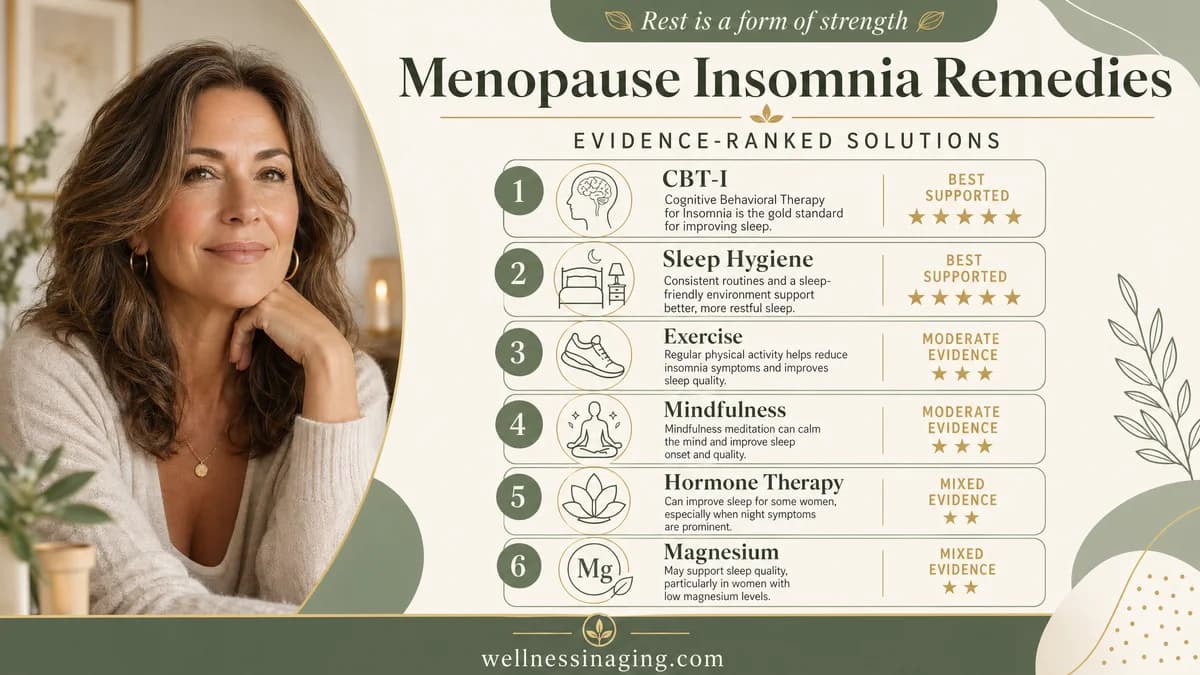
Melatonin didn't help. Chamomile tea didn't help. You've tried the standard sleep advice, and you're still waking up at 3am staring at the ceiling.
Here's why: menopause insomnia isn't generic insomnia. It breaks into four distinct patterns with different causes — and the remedy that works for one pattern actively fails for another.
Finding your pattern is the missing step.
Why Menopause Insomnia Requires Different Remedies
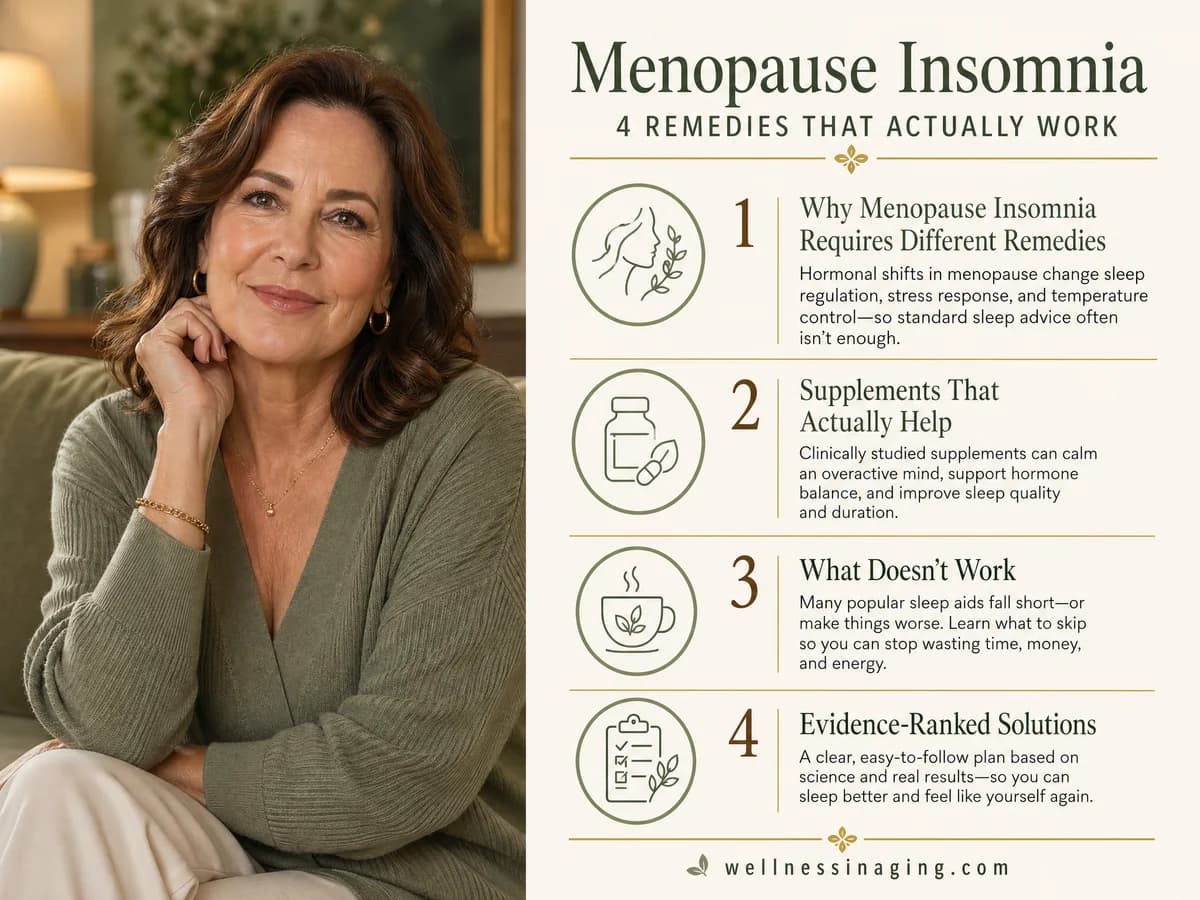
Menopause insomnia isn't generic insomnia with a hormonal label. The underlying drivers differ, and so should your approach. Research shows that menopausal sleep disruption breaks down into distinct patterns:
Vasomotor symptom (VMS) driven insomnia (40% of cases): Night sweats wake you 4-6 times per night. Each hot flash episode causes a 3-5 minute awakening. Standard sleep supplements can't prevent a heat surge from jerking you awake — you need remedies that either reduce VMS frequency or minimize their impact on sleep.
Hormonal sleep architecture changes (30%): Estrogen and progesterone directly influence sleep stages. Their decline reduces slow-wave sleep and REM quality. You may sleep "enough" hours but wake exhausted. The exhaustion doesn't make sense until you understand what's happening at the hormonal level.
Anxiety and stress-driven insomnia (20%): Racing thoughts at bedtime, difficulty quieting the mind, the "tired but wired" sensation. This responds well to GABA-modulating supplements like magnesium and L-theanine.
Sleep-disordered breathing (10%): Sleep apnea rates increase significantly after menopause. If you snore, wake with headaches, or feel unrested despite adequate sleep time, this needs separate evaluation.
The remedy that works depends on your pattern. A woman waking drenched in sweat needs different solutions than one who lies awake with racing thoughts. Both are real. Both have evidence-based options.
Supplements That Actually Help — Evidence Ranked
Magnesium Glycinate — Evidence: Moderate-Strong
Magnesium is the closest thing to a reliable sleep supplement for menopausal women, particularly those with anxiety-driven insomnia or the "tired but wired" pattern.
How it works: Magnesium acts as a mild GABA-A receptor agonist (similar mechanism to benzodiazepines, but much gentler) and antagonizes excitatory NMDA receptors. It also serves as a cofactor for melatonin synthesis. The net effect is reduced neural excitability and lower cortisol response to stress.
What the research shows: A 2012 study in the Journal of Research in Medical Sciences found that 500mg magnesium daily for 8 weeks improved Insomnia Severity Index scores by 4.5 points versus placebo, increased total sleep time by 24 minutes, and reduced sleep onset latency by 17 minutes in older adults with insomnia (Abbasi et al.). A 2022 meta-analysis found magnesium improved subjective sleep quality (SMD=0.42), though objective polysomnography measures didn't change significantly — suggesting the benefit may be partially anxiety-mediated (Zhang et al.).
Dosage: 200-400mg elemental magnesium as glycinate or bisglycinate, taken 1-2 hours before bed. Start at 200mg and increase if tolerated. Magnesium threonate (144mg elemental, sold as 2000mg Magtein) crosses the blood-brain barrier more effectively but costs 3-4x more.
Timeline: Some women notice a calming effect within days. Sleep quality improvements typically require 2-4 weeks of consistent use.
Who benefits most: Women with anxiety-driven insomnia, restless legs at night, or muscle cramps. Also those on proton pump inhibitors (which deplete magnesium) or with poor dietary intake.
What to avoid: Magnesium oxide (poor absorption, primarily a laxative). Doses above 400mg may cause GI upset. Separate from bisphosphonates and certain antibiotics by at least 2 hours.
Ready to build a complete menopause wellness plan? Our free Menopause Starter Guide includes evidence-based strategies for sleep, hot flashes, mood, and more — with specific protocols you can implement today.
Download your free guide →
Melatonin — Evidence: Moderate (Sleep Onset Only)
Melatonin is wildly misunderstood. It's not a sedative. It's a darkness signal — a hormone that tells your brain "it's time to prepare for sleep." This distinction matters for how you use it.
How it works: Melatonin binds to MT1/MT2 receptors in the suprachiasmatic nucleus, shifting circadian phase and promoting sleep onset. Production declines 30-50% by age 50-60, and estrogen withdrawal may further disrupt melatonin rhythm.
What the research shows: A 2013 meta-analysis found melatonin reduced sleep onset latency by 7.06 minutes and increased total sleep time by 8.25 minutes — statistically significant but modest (Ferracioli-Oda et al.). The effect is strongest for circadian rhythm disorders and difficulty falling asleep, NOT for night sweats waking you at 3 a.m.
Dosage: 0.5-3mg, taken 1-2 hours before desired sleep time.
This isn't a typo. More is NOT better.
Doses above 5mg don't improve efficacy and increase side effects (next-day grogginess, vivid dreams, headache). Prolonged-release formulations may help with sleep maintenance better than immediate-release.
Timeline: Works within 1-2 hours for sleep onset. Circadian phase-shifting requires 1-2 weeks of consistent timing.
Who benefits most: Women with difficulty falling asleep (not staying asleep), jet lag, or shifted circadian rhythms (wanting to sleep later and later). NOT ideal for VMS-driven awakenings — melatonin can't prevent a hot flash from waking you.
What to skip: High-dose melatonin (10mg, 20mg) provides zero additional benefit and more side effects. The 10mg gummies at the pharmacy are marketing, not science. Most women I've talked with didn't realize this — they assumed higher doses meant better sleep.
L-Theanine — Evidence: Moderate
L-theanine is an amino acid from green tea that promotes relaxation without sedation. It's particularly useful for the racing-mind variety of insomnia.
How it works: L-theanine increases GABA, serotonin, and dopamine in the central nervous system and promotes alpha wave brain activity (associated with calm alertness). It also reduces cortisol response to acute stress.
What the research shows: A 2019 study found 200mg L-theanine daily for 4 weeks improved PSQI sleep quality scores in adults with stress-related sleep disturbance (Hidese et al.). The effect appears to be anxiolytic rather than directly sedative — it helps quiet the mental noise that prevents sleep.
Dosage: 200-400mg, taken 30-60 minutes before bed. Can be combined with magnesium. Often found in commercial "calm" formulations.
Timeline: Acute calming effect within 30-60 minutes. Sleep quality improvements over 1-4 weeks.
Who benefits most: Women who feel "tired but wired" at bedtime, those with stress-driven insomnia, anyone who wants relaxation without next-day sedation.
Ashwagandha — Evidence: Moderate
Ashwagandha is an adaptogen with emerging evidence for sleep, particularly in those with chronic stress.
How it works: Ashwagandha reduces cortisol levels and HPA axis hyperactivity. Its active compounds (withanolides) have GABA-mimetic properties.
What the research shows: A 2020 randomized controlled trial found 600mg ashwagandha root extract daily for 8 weeks improved PSQI sleep quality scores by 72% versus 29% for placebo, with improvements in sleep onset latency and sleep efficiency (Deshpande et al.). A separate study found ashwagandha reduced cortisol by 28% versus placebo in chronically stressed adults.
Dosage: 300-600mg ashwagandha extract standardized to 5-10% withanolides, taken in the evening or split (morning and evening). KSM-66 and Sensoril are well-researched branded extracts.
Timeline: Acute stress reduction within 1-2 weeks. Sleep improvements over 2-8 weeks.
Who benefits most: Women with chronic stress, elevated cortisol, and co-occurring anxiety with sleep difficulty.
Cautions: Avoid in pregnancy, hyperthyroidism, or autoimmune conditions. May interact with thyroid medications and sedatives.
5-HTP — Evidence: Weak-Moderate (With Major Safety Caveat)
5-HTP is a serotonin precursor that theoretically addresses serotonin deficiency linked to estrogen withdrawal. However, it carries significant interaction risks.
Dosage: 50-100mg, 30-60 minutes before bed. Start low due to GI side effects.
Critical warning: 5-HTP combined with SSRIs, SNRIs, MAOIs, or triptans creates risk of serotonin syndrome — a potentially life-threatening condition. If you take any antidepressant, don't add 5-HTP without explicit guidance from your prescriber.
Who benefits most: Women with co-occurring depression and insomnia who aren't on antidepressants. For most women, magnesium or melatonin is a safer first choice.
What Doesn't Work — Save Your Money
Valerian Root — Evidence: Weak (Skip It)
Valerian has been marketed as a sleep aid for decades, but the clinical evidence is disappointing.
A Cochrane meta-analysis found valerian showed a small improvement in subjective sleep quality (SMD=0.17, 95% CI -0.09 to 0.43) — a clinically insignificant effect (Fernández-San-Martín et al., 2010). A randomized trial specifically in postmenopausal women with insomnia found 300mg valerian extract for 2 weeks did NOT improve sleep versus placebo (Taibi et al., 2007).
Verdict: Valerian is mostly placebo. The evidence doesn't justify the cost or the unpleasant smell. Try magnesium or melatonin instead.
High-Dose Melatonin (Above 5mg)
Many pharmacies sell 10mg, 20mg, even 30mg melatonin gummies. These doses aren't supported by evidence.
Research consistently shows that 0.5-3mg is the effective range, and higher doses increase side effects (grogginess, vivid nightmares, headache) without improving sleep outcomes.
Verdict: More isn't better. If 3mg melatonin doesn't help after 2 weeks, increasing to 10mg won't solve the problem — it means melatonin isn't the right remedy for your insomnia pattern.
Unstandardized Herbal Blend Products
"Sleep blend" supplements containing 8-12 herbs at sub-therapeutic doses are common. Without standardization, you can't know what dose of any active ingredient you're getting.
No clinical trials exist for these specific formulations.
Verdict: Choose single-ingredient supplements with documented effective doses. You'll know what you're taking and can evaluate if it works.
CBD for Sleep
Despite the marketing, CBD evidence for sleep is insufficient. Most studies showing benefit are in anxiety populations, not primary insomnia. Some research suggests CBD may actually increase wakefulness at low-to-moderate doses (Babson et al., 2017).
Verdict: Insufficient evidence. Expensive. Try proven options first.
Alcohol
Alcohol is a sedative, so it may help you fall asleep faster — but it suppresses REM sleep, increases sleep fragmentation in the second half of the night, and worsens night sweats.
Women who drink alcohol before bed often report sleeping "through the night" but waking exhausted. That's the REM suppression at work.
Verdict: Never use alcohol as a sleep aid. It makes menopausal insomnia worse.
Cooling Products for Night Sweat Insomnia
If night sweats are your primary sleep disruptor, supplements alone won't solve the problem. You need strategies that address the heat.
Active Cooling Systems — Evidence: Moderate
Products: ChiliPad/OOLER/Dock Pro (water-based mattress cooling, $500-900), BedJet (forced-air cooling, $400-600), Eight Sleep Pod (smart mattress with cooling, $2,000+).
How they work: These devices actively regulate mattress temperature, cooling the sleep surface to 55-68°F. Core body temperature naturally drops during sleep; night sweats disrupt this thermoregulation. Active cooling maintains optimal sleep temperature despite VMS episodes.
What the evidence shows: No large RCTs exist for specific devices, but the mechanistic rationale is strong. Research confirms that core body temperature elevation precedes hot flash onset, and cooling interventions reduce VMS frequency (Freedman, 2005). User satisfaction in real-world reviews is high among women with moderate-to-severe night sweats.
Who benefits most: Women with 4+ night sweat episodes per night, those wanting non-pharmaceutical solutions, partners with different temperature preferences (dual-zone control available).
Limitations: Expensive upfront cost. Some noise from water pumps or fans. Doesn't eliminate VMS, just reduces sleep impact.
Passive Cooling Bedding — Evidence: Weak
Cooling mattress toppers, gel pillows, and moisture-wicking sheets provide comfort improvement but limited sleep data. Many "cooling" pillows warm up within 20 minutes. Passive cooling can't match active systems for severe night sweats.
Who benefits most: Women with mild night sweats or hot sleeping preference. Lower-cost option to trial before investing in active cooling.
Prescription Options Your Doctor Might Offer
This article doesn't prescribe medications, but understanding your options helps you have informed conversations with your healthcare provider.
Hormone Replacement Therapy (HRT) — Evidence: Strong for VMS-Driven Insomnia
HRT is the only remedy that directly addresses the root cause of VMS-driven insomnia. Estrogen reduces night sweat frequency by 70-90%. Oral micronized progesterone (Prometrium) has sedative properties via GABA-A receptor modulation and is often taken at bedtime for this reason.
A polysomnography study found HRT improved sleep efficiency, slow-wave sleep, and reduced wake after sleep onset in postmenopausal women (Moe et al., 2001). The 2022 NAMS guidelines identify HRT as first-line for moderate-to-severe VMS causing sleep disruption.
HRT candidacy depends on individual risk factors, timing relative to menopause onset, and personal health history. For more on weighing options, see our guide on HRT versus natural remedies.
Low-Dose Doxepin (Silenor) — Evidence: Strong
Doxepin at low doses (3-6mg) is FDA-approved for sleep maintenance insomnia. At this dose, it functions primarily as an antihistamine without significant anticholinergic effects. It improves wake-after-sleep-onset by 23 minutes and total sleep time by 28 minutes versus placebo, with minimal tolerance development (Scharf et al., 2008).
Why Antihistamines Aren't the Answer
Over-the-counter antihistamines like diphenhydramine (Benadryl, ZzzQuil) and doxylamine (Unisom SleepTabs) are widely used but problematic for chronic menopausal insomnia:
- Tolerance develops within 3-7 days of nightly use — they stop working
- Anticholinergic effects include dry mouth, urinary retention, constipation, and cognitive impairment
- Beers Criteria lists antihistamines as potentially inappropriate for adults over 65 due to increased risk of cognitive decline, delirium, and falls
- Next-day sedation affects 20-40% of users
The cognitive risk is what concerns me most for women already dealing with menopause brain fog.
Verdict: Acceptable for occasional insomnia (1-2 nights per week). NOT recommended for nightly use in women over 50.
Choosing Your Remedy Based on Your Insomnia Pattern
| Your Pattern | First-Line Remedy | Second-Line | What to Skip |
|---|---|---|---|
| Night sweats waking you | HRT (if candidate) or active cooling device | Magnesium + cool bedroom | Melatonin alone (won't prevent VMS) |
| Anxiety/racing thoughts at bedtime | Magnesium glycinate 200-400mg | Add L-theanine 200mg | Valerian, high-dose melatonin |
| Difficulty falling asleep only | Melatonin 0.5-3mg, 1-2 hours before bed | Add magnesium | Antihistamines (tolerance builds fast) |
| Waking at 3-4am unable to return to sleep | Prolonged-release melatonin; discuss low-dose doxepin with provider | Ashwagandha for cortisol; address anxiety | CBD, alcohol |
| "Tired but wired" all the time | Magnesium + L-theanine + ashwagandha (stress stack) | CBT-I program | Benzodiazepines long-term |
Realistic Timelines and Expectations
Week 1-2: With magnesium, some women notice a calming effect within days. With melatonin, sleep onset may improve within the first week.
Don't expect dramatic transformation yet.
Week 4-6: Sleep quality improvements typically become noticeable for most supplements. If a remedy hasn't helped at all by week 4, it's probably not the right match for your insomnia pattern.
Week 8-12: Full evaluation window. If you've been consistent with a remedy for 8+ weeks with no improvement, reassess. Either the remedy isn't addressing your underlying driver, or you may need combination approaches or prescription options.
Important: Supplements can't overcome poor sleep hygiene. If you haven't addressed basics like consistent wake time, limited screens before bed, and a cool dark bedroom, start there. See our menopause sleep hygiene guide for CBT-I strategies. The best supplement in the world won't fix a bedroom that's 75°F with a TV running.
Want a complete roadmap for managing menopause symptoms? Our free Menopause Starter Guide covers sleep, hot flashes, mood, supplements, and when to see a doctor — all backed by clinical evidence.
Download your free guide →
Who This Is For — and Who Should See a Doctor First
Good candidates for supplement remedies:
- Women with mild-to-moderate insomnia symptoms
- Those who've optimized sleep hygiene but still struggle
- Women who prefer to start with non-prescription options
- Those with anxiety-driven or stress-related sleep difficulty
See your doctor first if:
- Insomnia is severe and significantly impairing daily function
- You have symptoms suggesting sleep apnea (snoring, gasping, morning headaches, excessive daytime sleepiness despite adequate sleep time)
- Night sweats are moderate-to-severe (4+ episodes nightly) and you want to discuss HRT
- You experience sudden-onset hot flashes under age 40 (may indicate premature ovarian insufficiency)
- You're already taking medications that may interact with supplements (especially SSRIs, SNRIs, blood thinners, thyroid medications)
- Insomnia is accompanied by significant depression or anxiety requiring treatment
The Bottom Line
Start with magnesium glycinate 200mg tonight, taken 1-2 hours before bed. If anxiety or racing thoughts are keeping you awake, this addresses the most common non-VMS driver of menopausal insomnia. After 2-4 weeks, assess whether sleep quality has improved. If you primarily struggle with falling asleep, add low-dose melatonin (1-3mg). If night sweats are your main problem, magnesium won't fix the root issue — discuss HRT with your provider or consider an active cooling device.
Skip valerian, high-dose melatonin, CBD, and nightly antihistamines. They either lack evidence or carry risks that outweigh limited benefits.
For the behavioral strategies that work alongside these remedies, see Menopause Sleep Hygiene: CBT-I Strategies That Work. If brain fog is affecting you alongside sleep issues, addressing insomnia often helps both. And for understanding night sweats in depth, including non-pharmaceutical strategies, we have a dedicated guide.
References
Abbasi et al., J Res Med Sci, 2012 | Ferracioli-Oda et al., PLoS One, 2013 | Fernández-San-Martín et al., Sleep Med, 2010 | Taibi et al., Sleep Med Rev, 2007 | Deshpande et al., Sleep Med, 2020 | Hidese et al., Nutrients, 2019 | Scharf et al., J Clin Psychiatry, 2008 | Moe et al., Sleep, 2001 | Freedman, Semin Reprod Med, 2005 | NAMS Hormone Therapy Position Statement, Menopause, 2022
This content is for informational purposes only and does not constitute medical advice. Always consult with a qualified healthcare provider before starting any new supplement or treatment. Individual results may vary.
Free Download
The Menopause Supplement Evidence Guide
Which supplements have real research behind them. 12 pages, free.
Frequently Asked Questions
Related Articles
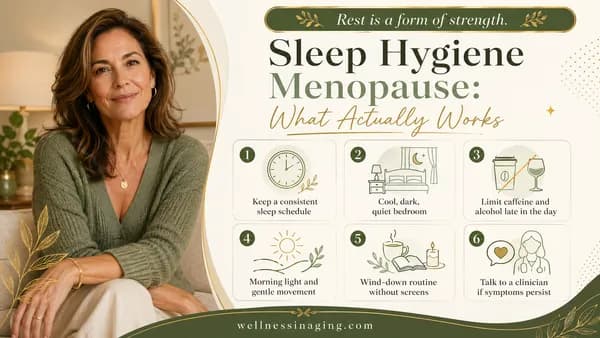
Sleep Hygiene Menopause: What Actually Works
Sleep hygiene menopause strategies that work: CBT-I, HRT, magnesium, and what doesn't. Evidence-rated guide with specific dosages and timelines.
Read article →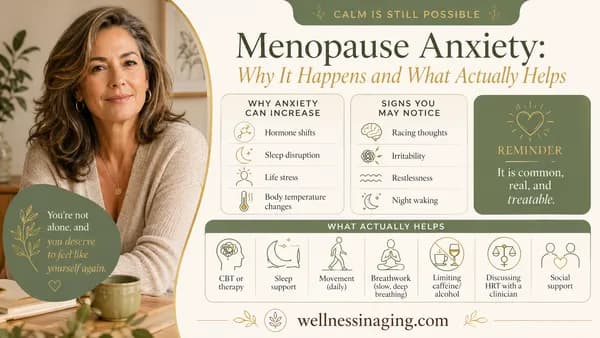
Menopause Anxiety: Why It Happens and What Actually Helps
Menopause anxiety affects up to 70% of perimenopausal women. Learn why it happens, evidence-ranked treatments, and when symptoms typically improve.
Read article →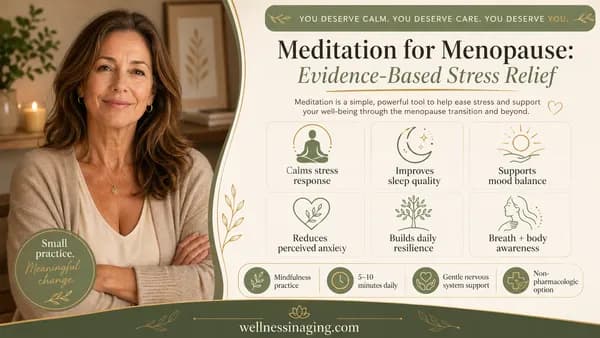
Meditation for Menopause: Evidence-Based Stress Relief
Paced breathing reduces hot flashes 44%. MBSR cuts anxiety 25%. Match the right meditation technique to your symptoms with this evidence-rated guide.
Read article →