
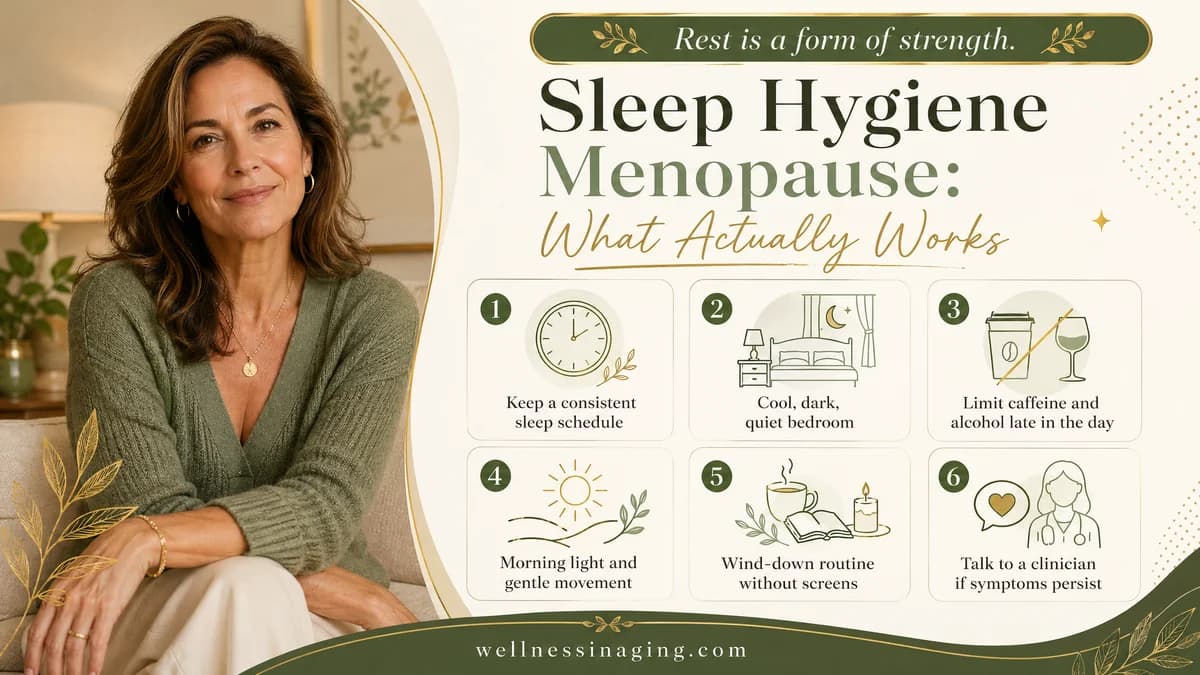
Get Started: Free Menopause Starter Guide Evidence-based strategies for sleep, hot flashes, and when to see your doctor. No fluff — just practical steps you can start today. Download free guide
You wake at 2:47am, sheets damp, heart racing from a hot flash that pulled you straight out of deep sleep. By the time your body cools down, your mind's started its 3am inventory of everything you need to do tomorrow. You finally drift off around 4:30, only to have your alarm go off at 6. This has been your reality for months, maybe years.
Sleep disturbances affect 40-60% of women during perimenopause and postmenopause — making it the second most common complaint after hot flashes. Here's what most articles won't tell you: the interventions with the strongest evidence aren't supplements or sleep apps. They're behavioral strategies that require effort but produce lasting change, and for many women, hormone therapy that addresses the root cause of those night sweats.
This guide ranks every common sleep intervention by actual clinical evidence — Strong, Moderate, or Weak — so you can stop wasting money on valerian and start with what research shows actually works. You'll find specific dosages, realistic timelines, and an honest section on what doesn't work despite being everywhere on wellness websites.
Why Sleep Falls Apart After 45
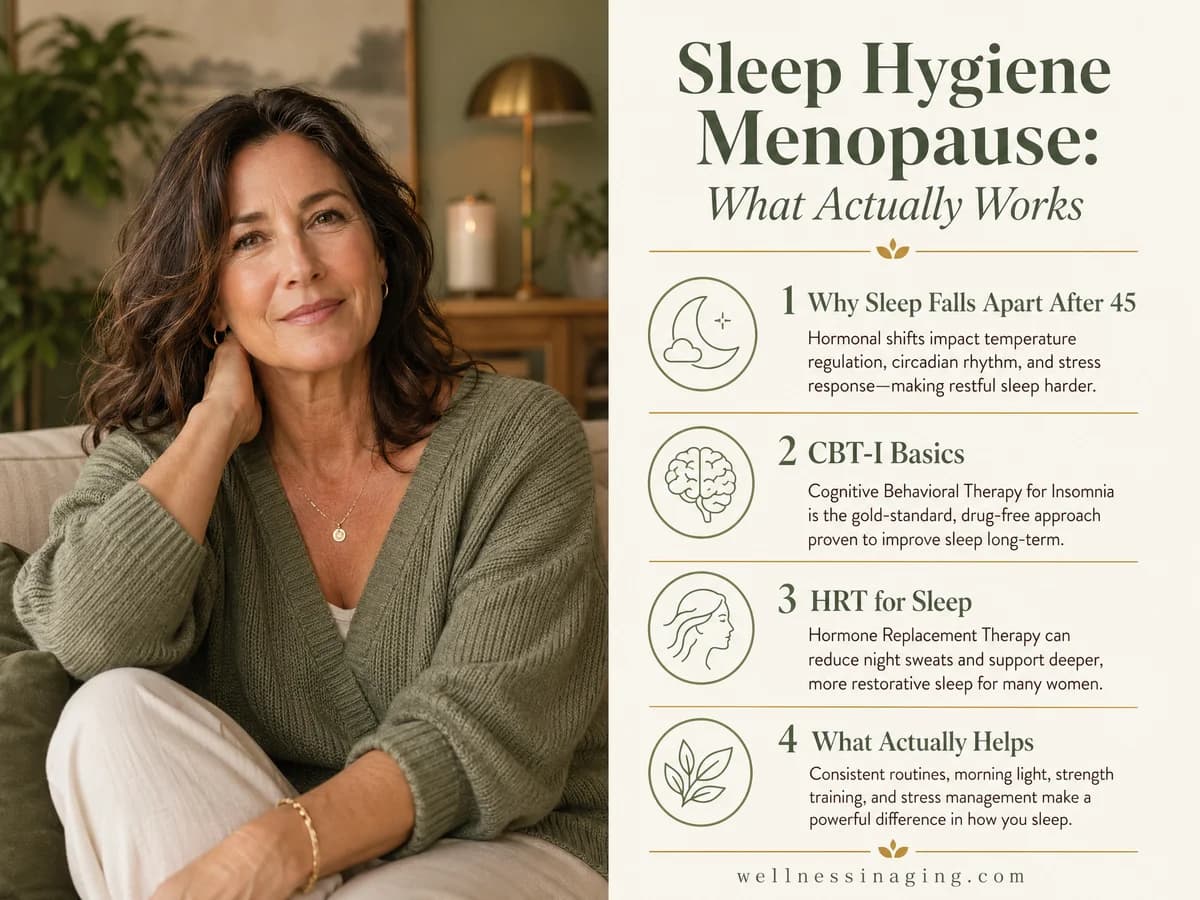
Your sleep architecture changes measurably as estrogen and progesterone decline. Slow-wave sleep (the deep, restorative phase) decreases by 3-8% per decade starting in perimenopause. Sleep efficiency — the percentage of time in bed you actually spend asleep — drops from around 90% in your 30s to 75-80% by your 50s (Jehan et al., 2015).
This isn't failure. This is biology.
Estrogen promotes REM sleep and helps regulate your body's thermostat. When estrogen declines, your hypothalamus becomes more sensitive to small temperature changes, triggering vasomotor symptoms (hot flashes and night sweats) that fragment sleep. Progesterone has sedative effects through GABA-A receptor modulation — when progesterone drops, you lose that natural calming effect.
Here's what else happens: melatonin production declines approximately 10% per decade after age 40. Your cortisol rhythm flattens, meaning higher evening cortisol (which keeps you alert when you want to wind down) and lower morning cortisol (which makes mornings feel harder). Your circadian clock shifts earlier. That's why falling asleep at 8pm and waking at 4am becomes more common.
Understanding this helps set realistic expectations. You're not broken — your hormonal landscape has shifted.
CBT-I: The Gold Standard Treatment — Evidence Rating: STRONG
Cognitive Behavioral Therapy for Insomnia (CBT-I) is the first-line treatment recommended by the American Academy of Sleep Medicine (AASM), the UK's NICE guidelines, and The Menopause Society (NAMS). It outperforms sleeping pills for chronic insomnia and the effects last long after treatment ends (Edinger et al., 2021).
Effect sizes in perimenopausal and postmenopausal women:
- Sleep efficiency improvement: +10-15 percentage points
- Sleep latency reduction: -20 minutes average
- Wake after sleep onset reduction: -30-45 minutes
- Total sleep time increase: +30-60 minutes
- 60-80% remission rate at 6-month follow-up (McCurry et al., 2016)
The Five Components of CBT-I
1. Sleep Restriction Therapy — The hardest part, but most effective. You temporarily limit time in bed to match your actual sleep time. If you're sleeping 5.5 hours but spending 8 hours in bed, you restrict to 6 hours initially. This builds sleep pressure and consolidates fragmented sleep. When your sleep efficiency reaches 85%+, you add 15-30 minutes.
2. Stimulus Control — Your bed becomes associated with wakefulness and frustration when you toss and turn. Stimulus control breaks this: bed is only for sleep and sex. If you're not asleep within 15-20 minutes (estimate, don't clock-watch), get up, go to another room, do something quiet in dim light, and return only when sleepy. Same wake time every day. Even weekends.
3. Cognitive Restructuring — Challenge beliefs like "I must get 8 hours or I'll be useless" or "I'll never sleep normally again." These beliefs create performance anxiety that worsens insomnia. Replace with: "I've functioned on less before. Sleep will come."
4. Sleep Hygiene Education — The foundation (covered below), but not enough on its own.
5. Relaxation Training — Progressive muscle relaxation, diaphragmatic breathing (4-7-8 breath), body scan meditation. These reduce physiological arousal before bed.
How to Access CBT-I
Digital CBT-I apps deliver 70-80% of the benefit of in-person therapy:
- Sleepio: Most studied. A 2019 randomized trial showed 76% insomnia remission at 8 weeks (Espie et al., 2019)
- Somryst: FDA-cleared prescription digital therapeutic, covered by some insurance
- CBT-I Coach and Insomnia Coach: Free apps from the VA, designed as self-guided options
In-person CBT-I: 6-8 weekly sessions with a behavioral sleep medicine specialist. Find providers through the Society of Behavioral Sleep Medicine at behavioralsleep.org. Cost: $150-300 per session, often covered by insurance.
Timeline: Improvements begin week 2-3, peak at 6-8 weeks, and maintain at 12-24 months.
Who benefits most: Women with sleep-onset or sleep-maintenance insomnia (not sleep apnea or restless legs). If night sweats are severe, address those first — CBT-I works better when you're not being jolted awake by hot flashes.
HRT for Sleep — Evidence Rating: MODERATE to STRONG
Hormone replacement therapy improves sleep primarily by reducing night sweats. A meta-analysis found estrogen therapy reduced the odds of insomnia by 59% (OR=0.41) (Cintron et al., 2017). For women whose sleep problems are driven by waking up drenched and overheated, HRT can be transformative.
What the research shows:
- Night sweat reduction: 70-80% in frequency and severity
- Sleep efficiency improvement: +5-10 percentage points in women with moderate-severe vasomotor symptoms
- Sleep latency: modest improvement (-5 to -10 minutes)
- Pittsburgh Sleep Quality Index (PSQI) improvement: -2.1 points vs -0.6 placebo (Joffe et al., 2010)
Formulation Matters for Sleep
Oral micronized progesterone (brand name Prometrium) has sedative effects through GABA modulation. Take it 1-2 hours before bed to maximize sleep benefit. This is why combination therapy (estrogen + progesterone) often works better for sleep than estrogen alone.
Transdermal estrogen (patches, gels) maintains stable overnight levels when applied in the evening.
Estrogen-only therapy (for women who've had a hysterectomy) helps with night sweats but lacks progesterone's direct sedative effect.
Timeline: Night sweat improvement begins in 2-4 weeks, maximum benefit by 8-12 weeks.
Who benefits: Women 45-60 within 10 years of menopause onset, with moderate-severe vasomotor symptoms, and no contraindications (history of breast cancer, blood clots, liver disease, or unexplained vaginal bleeding).
For a detailed comparison of HRT versus natural approaches, see our guide on HRT vs natural remedies for menopause.
Magnesium Supplementation — Evidence Rating: MODERATE
Magnesium acts on GABA-A receptors (similar mechanism to benzodiazepines, but much weaker) and modulates the HPA axis to reduce cortisol. A randomized trial found magnesium improved sleep efficiency by 12% and reduced Insomnia Severity Index scores by 4.2 points versus 1.6 for placebo (Abbasi et al., 2012).
The form matters significantly:
| Form | Absorption | Sleep Benefit | Notes |
|---|---|---|---|
| Magnesium glycinate | High | Best for sleep | Glycine adds calming effect |
| Magnesium threonate | Moderate-high | Good for cognition + sleep | Crosses blood-brain barrier |
| Magnesium citrate | High | Moderate | May cause loose stools |
| Magnesium oxide | Low (4%) | Poor | Laxative, not for sleep |
Dosage: 200-400mg elemental magnesium (glycinate form), taken 1-2 hours before bed.
Timeline: 2-4 weeks for noticeable improvement.
Safety: Upper limit is 350mg/day from supplements. Main side effect is diarrhea (dose-dependent). Use caution with kidney disease.
Realistic expectation: Magnesium produces modest improvements — think "takes the edge off" rather than "solves insomnia." It's most helpful as part of a broader approach, especially for women who are deficient (estimated 50% of Americans don't meet daily requirements).
For more on magnesium's role in menopause, see our detailed guide on magnesium for menopause.
Melatonin — Evidence Rating: MODERATE (Mixed)
Melatonin gets a lot of attention, but the effect sizes are modest. A meta-analysis found melatonin reduced sleep latency by only 7.2 minutes and increased total sleep time by 8.2 minutes (Ferracioli-Oda et al., 2013). It's more helpful for sleep-onset problems (trouble falling asleep) than sleep-maintenance problems (waking in the night).
Dosage: Less is often more. Physiologic dose is 0.3-0.5mg, but commercial products start at 1mg. Studies used 1-3mg — higher doses (5-10mg) don't work better and increase next-day grogginess.
Timing: 30-60 minutes before desired bedtime.
Best for: Circadian rhythm issues (jet lag, shift work, falling asleep too early and waking too early). Less helpful for menopause-related insomnia driven by night sweats or anxiety.
Formulations: Immediate-release for trouble falling asleep; extended-release for trouble staying asleep (though evidence for extended-release superiority is limited).
Sleep Hygiene Behaviors — Evidence Rating: WEAK (as standalone)
Here's an inconvenient truth: sleep hygiene alone rarely fixes chronic insomnia. A meta-analysis found sleep hygiene education produced small, inconsistent effects with an effect size of only d=0.2-0.3 (Irish et al., 2015). The AASM calls it "necessary but not enough."
That said, poor sleep hygiene menopause strategies can sabotage other interventions. These are the foundations:
Bedroom temperature: 60-67°F (15.5-19.5°C). Each 1°C above 20°C correlates with 3-5% reduced sleep efficiency (Okamoto-Mizuno & Mizuno, 2012). For women with night sweats, aim for the lower end (60-63°F).
Fixed wake time: The single most important circadian anchor. Same time every day, including weekends. Even after a rough night.
Caffeine cutoff: None after 2pm. Caffeine's half-life is 5-6 hours, but quarter-life extends to 10-12 hours — meaning that 3pm coffee still has 25% of its caffeine hitting your system at 1am.
Alcohol: Disrupts REM sleep in the first half of the night, then causes rebound fragmentation in the second half. Never use it as a sleep aid.
Exercise: Regular activity improves sleep quality, but avoid high-intensity exercise within 3-4 hours of bedtime (raises core temperature and cortisol). Gentle stretching or yoga in the evening? Fine.
Bed = sleep and sex only: No TV, no phone scrolling, no working in bed.
What Doesn't Work (Despite Being Everywhere)
Building trust means being honest about what lacks evidence. These interventions are popular but don't hold up under scrutiny.
Valerian Root — Evidence Rating: INSUFFICIENT
Multiple randomized trials show mixed results at best. A meta-analysis found a small, non-significant effect (SMD=0.17) — not clinically meaningful (Fernández-San-Martín et al., 2010). Commercial products vary wildly in quality (0.3-2% valerenic acid), and there's no standardized extract. Rare hepatotoxicity has been reported.
Verdict: Save your money. If you want to try it anyway, use 400-900mg extract 30-60 minutes before bed for a maximum of 4 weeks.
Chamomile Tea — Evidence Rating: WEAK
One small trial showed modest improvement in postpartum women; other studies show no significant effect. The active compound (apigenin) binds GABA receptors weakly, but tea concentration is likely too low for meaningful effect. Any benefit probably comes from the ritual (warm beverage, winding down) rather than the chamomile itself.
Verdict: Harmless and may help via placebo effect. Not an evidence-based treatment.
Lavender Aromatherapy — Evidence Rating: WEAK to INSUFFICIENT
Systematic reviews show small, inconsistent improvements in subjective sleep quality, but most studies have high bias and poor methodology (Lillehei & Halcon, 2014). Inhalation absorption of active compounds is minimal.
Verdict: Low risk, may create a pleasant sleep environment. Not a standalone treatment.
Sleeping Pills Long-Term — Evidence Rating: NOT RECOMMENDED
AASM and NICE guidelines recommend against benzodiazepines and Z-drugs (zolpidem/Ambien, eszopiclone/Lunesta) for chronic insomnia beyond 2-4 weeks. Tolerance develops quickly, dependence risk is real, and withdrawal causes rebound insomnia worse than baseline. Sleep architecture is disrupted: these drugs suppress slow-wave sleep. Observational studies link long-term use to increased dementia risk (causal relationship unclear but concerning).
Verdict: Acceptable for acute crises (2-4 weeks max). For chronic insomnia, CBT-I is first-line.
Alcohol as Sleep Aid — Evidence Rating: NOT RECOMMENDED
Alcohol is a sedative that reduces sleep latency initially. But after your body metabolizes it (2-4 hours), withdrawal causes fragmentation and early morning awakening. REM sleep is suppressed in the first half of the night, then rebounds with vivid dreams and restlessness. Total sleep time may increase slightly, but quality drops significantly.
Verdict: Worsens sleep quality. Never use as a sleep intervention.
Night Sweat-Specific Strategies
If night sweats are your primary sleep disruptor, addressing temperature management directly can help while you explore longer-term solutions like HRT or CBT-I.
The Layering System
Base layer: Moisture-wicking fitted sheet (bamboo, Tencel, or performance polyester)
Pajamas: Lightweight, breathable, easy to remove (button-front top, loose shorts)
Light blanket: Cotton or bamboo blend, easily kickable
Heavier comforter: For after the hot flash passes and body temperature drops
Bedside: Extra pajama set, small towel, water bottle
Room Temperature
Keep bedroom at 60-67°F. For women with active night sweats, aim for 60-63°F. A bedside fan increases airflow and evaporative cooling.
Cooling Products
Cooling mattress pads (ChiliPad, Ooler, BedJet) have no peer-reviewed RCT data but strong anecdotal reports and sound mechanistic rationale. Moisture-wicking sheets similarly lack rigorous studies but make practical sense.
For more on managing night sweats, see our guide on night sweats during menopause.
Realistic Sleep Expectations After 50
One of the most damaging things about sleep advice is the implication that everyone needs 8 hours of unbroken sleep. For women over 50, this sets up an unrealistic standard that creates anxiety and worsens insomnia.
What's actually normal for this age group:
| Sleep Metric | Age 30 | Age 50+ | Notes |
|---|---|---|---|
| Total sleep time | 7-8 hours | 6.5-7.5 hours | Less needed, not a deficiency |
| Sleep efficiency | ~90% | 75-85% | More time awake in bed is normal |
| Sleep latency | 10-15 min | 15-30 min | Taking longer to fall asleep is normal |
| Wake episodes | 0-2 | 2-4 | Some fragmentation is normal aging |
| Deep sleep % | 20-25% | 10-15% | Less deep sleep is biology, not pathology |
Sleep efficiency formula: (Time asleep ÷ Time in bed) × 100. If you sleep 6 hours in an 8-hour window, your efficiency is 75% — within normal range for your age.
Red Flags That Warrant Medical Evaluation
- Loud snoring with witnessed breathing pauses → sleep apnea (prevalence doubles postmenopause)
- Irresistible urge to move legs at night → restless legs syndrome
- Sleep efficiency chronically below 70% with daytime impairment → insomnia disorder
- Falling asleep uncontrollably during the day → possible sleep apnea or narcolepsy
- Physically acting out dreams → REM sleep behavior disorder (needs neurologist)
When Sleep Tracking Backfires: Orthosomnia
Consumer wearables (Oura, Fitbit, Apple Watch) can be helpful for identifying patterns — bedtime consistency, correlations with caffeine or alcohol. But they're only 60-70% accurate for sleep stages compared to polysomnography, and they tend to overestimate total sleep time by 10-20 minutes.
The bigger problem is orthosomnia: an unhealthy obsession with achieving "perfect" sleep scores (Baron et al., 2017). If you're checking your sleep score first thing every morning and feeling anxious when it's low, the tracking may be worsening your sleep.
Signs tracking has become counterproductive:
- Adjusting behavior to optimize score rather than how you actually feel
- Increased anxiety about sleep on nights you don't wear the device
- Checking the device multiple times per night
Solution: Take a 2-4 week break from tracking. Reintroduce only if it helps specific behavior change without creating anxiety.
Free Download: Menopause Starter Guide A practical checklist covering sleep, supplements, and when to see your doctor — no fluff, just evidence. Download free →
Ready to Fix Your Sleep? Download our free Menopause Starter Guide with a complete sleep protocol, supplement checklist, and doctor discussion guide. Get your free guide
The Bottom Line
Start with the intervention that has the strongest evidence: CBT-I. Download the free CBT-I Coach app tonight and begin tracking your sleep for one week. From that data, calculate your sleep efficiency and set a personalized sleep restriction schedule.
If night sweats wake you more than twice per night, prioritize temperature management: set your bedroom to 60-65°F, use moisture-wicking sheets, and keep a bedside fan. Discuss HRT with your healthcare provider if vasomotor symptoms are severe.
Add magnesium glycinate 200mg before bed as a low-risk adjunct. Skip the valerian, chamomile supplements, and lavender pills — the evidence isn't there.
For more on managing the mental health aspects of menopause, read our guides on anxiety during menopause, menopause brain fog, and meditation for menopause.
Take the Next Step Get our complete Menopause Starter Guide with actionable protocols for sleep, symptoms, and supplement timing. Download your free guide
This content is for informational purposes only and does not constitute medical advice. Always consult with a qualified healthcare provider before starting any new supplement or treatment. Individual results may vary.
References
-
Abbasi B, Kimiagar M, Sadeghniiat K, et al. The effect of magnesium supplementation on primary insomnia in elderly: A double-blind placebo-controlled clinical trial. J Res Med Sci. 2012;17(12):1161-1169.
-
Baron KG, Abbott S, Jao N, et al. Orthosomnia: Are Some Patients Taking the Quantified Self Too Far? J Clin Sleep Med. 2017;13(2):351-354.
-
Cintron D, Lipford M, Larrea-Mantilla L, et al. Efficacy of menopausal hormone therapy on sleep quality: systematic review and meta-analysis. Endocrine. 2017;55(3):702-711.
-
Edinger JD, Arnedt JT, Bertisch SM, et al. Behavioral and psychological treatments for chronic insomnia disorder in adults: an American Academy of Sleep Medicine clinical practice guideline. J Clin Sleep Med. 2021;17(2):255-262.
-
Espie CA, Emsley R, Kyle SD, et al. Effect of Digital Cognitive Behavioral Therapy for Insomnia on Health, Psychological Well-being, and Sleep-Related Quality of Life: A Randomized Clinical Trial. JAMA Psychiatry. 2019;76(1):21-30.
-
Ferracioli-Oda E, Qawasmi A, Bloch MH. Meta-analysis: melatonin for the treatment of primary sleep disorders. PLoS One. 2013;8(5):e63773.
-
Fernández-San-Martín MI, Masa-Font R, Palacios-Soler L, et al. Effectiveness of Valerian on insomnia: a meta-analysis of randomized placebo-controlled trials. Sleep Med. 2010;11(6):505-511.
-
Irish LA, Kline CE, Gunn HE, et al. The role of sleep hygiene in promoting public health: A review of empirical evidence. Sleep Med Rev. 2015;22:23-36.
-
Jehan S, Masters-Isarilov A, Salifu I, et al. Sleep Disorders in Postmenopausal Women. J Sleep Disord Ther. 2015;4(5):212.
-
Joffe H, Massler A, Sharkey KM. Evaluation and management of sleep disturbance during the menopause transition. Semin Reprod Med. 2010;28(5):404-421.
-
Lillehei AS, Halcon LL. A systematic review of the effect of inhaled essential oils on sleep. J Altern Complement Med. 2014;20(6):441-451.
-
McCurry SM, Guthrie KA, Morin CM, et al. Telephone-Based Cognitive Behavioral Therapy for Insomnia in Perimenopausal and Postmenopausal Women With Vasomotor Symptoms: A MsFLASH Randomized Clinical Trial. JAMA Intern Med. 2016;176(7):913-920.
-
Okamoto-Mizuno K, Mizuno K. Effects of thermal environment on sleep and circadian rhythm. J Physiol Anthropol. 2012;31:14.
Free Download
The Menopause Supplement Evidence Guide
Which supplements have real research behind them. 12 pages, free.
Frequently Asked Questions
Related Articles
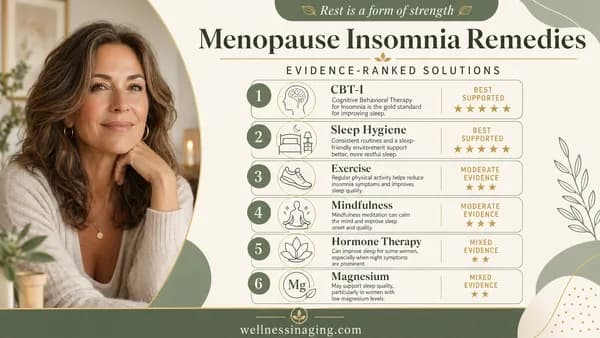
Menopause Insomnia Remedies: Evidence-Ranked Solutions
Evidence-ranked menopause insomnia remedies: magnesium, melatonin, cooling devices, and HRT. Learn specific dosages, timelines, and what to skip.
Read article →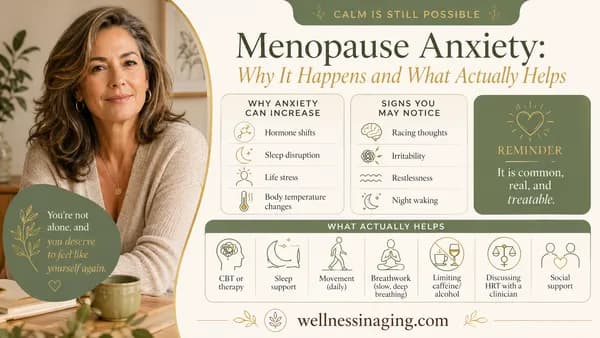
Menopause Anxiety: Why It Happens and What Actually Helps
Menopause anxiety affects up to 70% of perimenopausal women. Learn why it happens, evidence-ranked treatments, and when symptoms typically improve.
Read article →
Meditation for Menopause: Evidence-Based Stress Relief
Paced breathing reduces hot flashes 44%. MBSR cuts anxiety 25%. Match the right meditation technique to your symptoms with this evidence-rated guide.
Read article →