
You wake at 3 a.m. soaked in sweat, heart racing, and the thought of another sleepless night feels unbearable. Your doctor mentioned yoga might help, but the class you tried last month — a fast-paced, heated vinyasa — left you feeling worse, not better. Here's what nobody told you: the type of yoga matters enormously for menopause symptoms, and some styles actively work against you.
The research on yoga and menopause has matured significantly over the past decade. We now have meta-analyses showing which symptoms respond well, which yoga styles work best for specific complaints, and — critically — what yoga can't fix. Most articles online say "do yoga" without explaining which type. That approach leaves women frustrated and skeptical.
Below: the mechanism behind why certain yoga styles affect hot flashes and mood, a style-by-symptom matching guide with evidence ratings, the specific breathing technique that outperforms all other non-drug hot flash interventions, and an honest assessment of what yoga won't help.
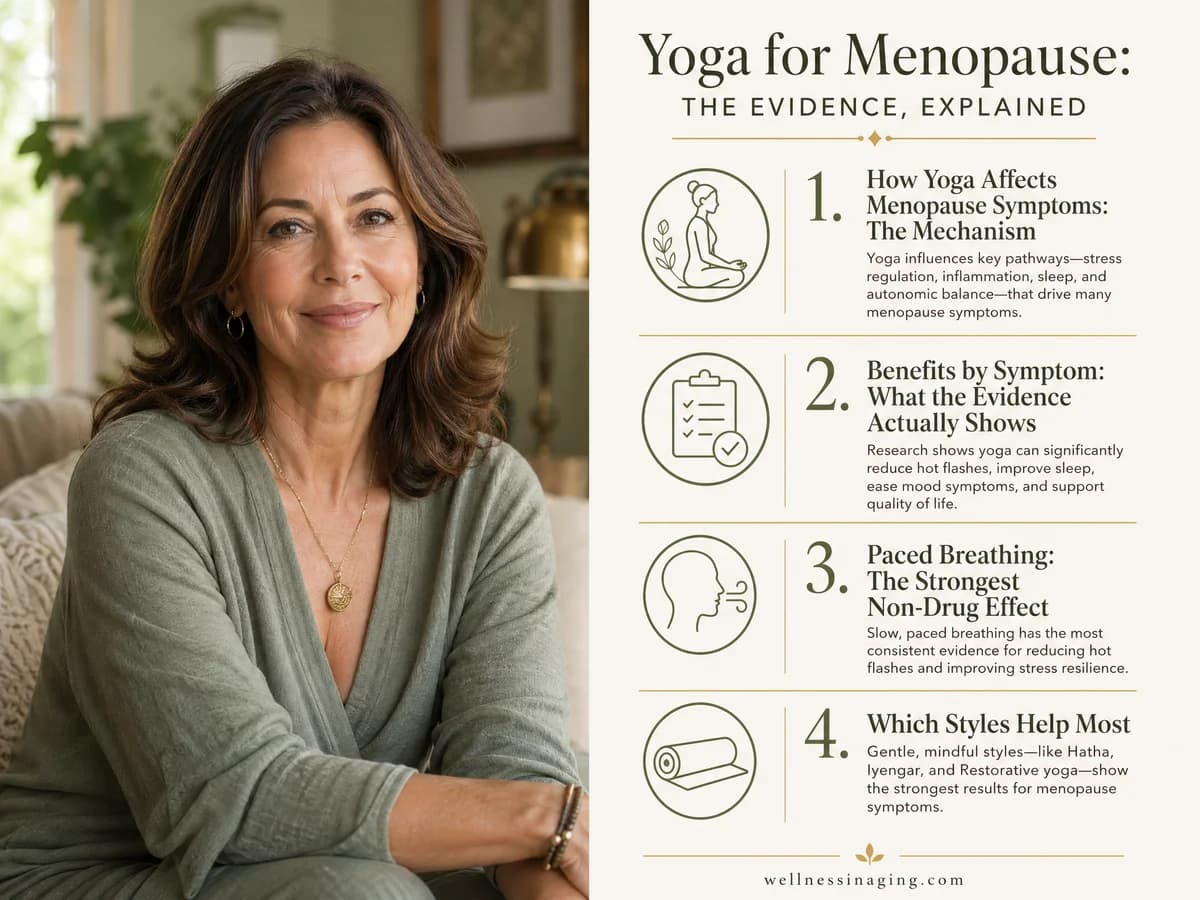
How Yoga Affects Menopause Symptoms: The Mechanism
The connection between yoga and menopause symptom relief runs through your autonomic nervous system. Hot flashes begin when KNDy neurons in your hypothalamus respond to estrogen withdrawal by activating your sympathetic nervous system — the "fight or flight" response. This triggers vasodilation and sweating even when you're not actually overheated (Sternfeld et al., 2014).
Slow-paced, breath-focused yoga activates the parasympathetic nervous system (rest and digest), reducing sympathetic dominance. Women with higher sympathetic activity experience more frequent and severe hot flashes. Yoga measurably reduces sympathetic tone as measured by heart rate variability (Cramer et al., 2012).
The HPA axis connection matters too. Perimenopause and menopause are associated with elevated cortisol and HPA axis dysregulation. Regular yoga practice reduces cortisol secretion and normalizes stress reactivity. Lower cortisol improves sleep quality, reduces anxiety, and may decrease hot flash frequency since stress is a known trigger (Ross & Thomas, 2010).
Here's a mechanism specific to hot flashes: paced breathing may widen the thermoneutral zone — the temperature range before your body initiates sweating or shivering. Estrogen withdrawal narrows this zone, making your thermostat hypersensitive. Slow diaphragmatic breathing appears to recalibrate this system (Avis et al., 2016).
Benefits by Symptom: What the Evidence Actually Shows
Not all menopause symptoms respond equally to yoga. Here's what the research supports, rated by evidence strength.
Hot Flashes and Night Sweats — Evidence: MODERATE
A meta-analysis of 5 randomized controlled trials (n=582 women) found yoga reduced hot flash frequency by 31% and severity by 34% compared to control groups (Cramer et al., 2012). A separate RCT with 249 women found 12 weeks of yoga reduced bothersome vasomotor symptoms by 66% — similar to aerobic exercise (Newton et al., 2014).
The Cochrane review characterizes this as "low to moderate quality evidence." Results vary by yoga style, frequency, and baseline symptom severity. Restorative yoga and slow-paced Iyengar styles show more consistent results than vigorous vinyasa. The breath focus component seems critical — yoga classes without pranayama show weaker results.
Sleep Quality — Evidence: MODERATE to STRONG
Nine out of 11 studies in a systematic review showed yoga improved subjective sleep quality in menopausal women. A 2012 RCT found 4 months of yoga improved Pittsburgh Sleep Quality Index scores by 36% in postmenopausal women (Afonso et al., 2012). A 2020 meta-analysis reported significant improvement with a moderate effect size (SMD -0.59) (Wang et al., 2020).
Evening yoga — especially restorative or yin — works better than morning practice for sleep. The combination of poses, breathing, and meditation outperforms poses alone. Expect at least 8 weeks before measurable improvement. Most women report noticing the difference around week 6.
Anxiety and Mood — Evidence: STRONG
This is where yoga shines. A meta-analysis of 12 RCTs (n=619 women) found yoga significantly reduced anxiety (SMD -0.76, large effect) and depression (SMD -0.62, moderate-large effect) in menopausal women (Cramer et al., 2018). An 8-week yoga program reduced anxiety scores by 30% and depression by 46% in perimenopausal women (Chattha et al., 2008).
Benefits appear within 4-8 weeks. The meditation and mindfulness components seem critical — physical poses alone show weaker effects. Effect sizes are comparable to some antidepressants for mild-to-moderate anxiety and depression.
Why it works: yoga increases GABA (an inhibitory neurotransmitter that drops during menopause), reduces cortisol, enhances BDNF (brain-derived neurotrophic factor), and improves heart rate variability (Streeter et al., 2010).
Joint Pain and Stiffness — Evidence: MODERATE
Eight weeks of yoga reduced joint pain by 20-30% in adults with arthritis (Moonaz et al., 2015). While this study wasn't menopause-specific, estrogen loss increases joint pain (arthralgia) in 50-60% of menopausal women, and the mechanisms overlap.
Gentle yoga provides dual benefits: stretching improves flexibility while strengthening stabilizes joints. Yoga also reduces inflammatory cytokines that worsen menopause-related joint symptoms. Consistent practice (3 times weekly minimum) seems necessary.
Free Resource: Menopause Starter Guide
If you're new to navigating menopause symptoms, download our evidence-based starter guide. It includes symptom tracking tools, lifestyle intervention checklists, and a framework for deciding when to try natural approaches versus consulting your doctor.
Cognitive Function and Brain Fog — Evidence: MODERATE
An 8-week Hatha yoga study improved executive function, working memory, and cognitive flexibility in older adults (Gothe et al., 2014). Menopause-specific research is limited, but mechanisms overlap: reduced inflammation, increased BDNF, improved sleep (critical for memory consolidation), and increased cerebral blood flow.
The meditation component may drive most cognitive benefits. We need more menopause-specific research here.
Paced Breathing: The Strongest Non-Drug Intervention
If you take one technique from this article, make it paced breathing. Just one. A 2007 RCT by Freedman and Roehrs found slow diaphragmatic breathing at 6-8 breaths per minute reduced hot flash frequency by 44% over 8 weeks. No other non-pharmacological intervention has matched this effect size.
The practice:
- Inhale for 4-5 counts, exhale for 4-5 counts
- Target: 6-8 breaths per minute (normal resting rate is 12-20)
- Duration: 10-15 minutes, twice daily OR when a hot flash begins
- Position: Sit comfortably, one hand on chest, one on belly
- Goal: Belly rises more than chest; slow down gradually without forcing
Why it works: paced breathing increases parasympathetic tone and may widen the thermoneutral zone. You can use a metronome app set to 6-8 breaths per minute if timing feels difficult.
This technique works independently of a full yoga practice. Practice it at your desk, in bed, or when you feel a hot flash starting.
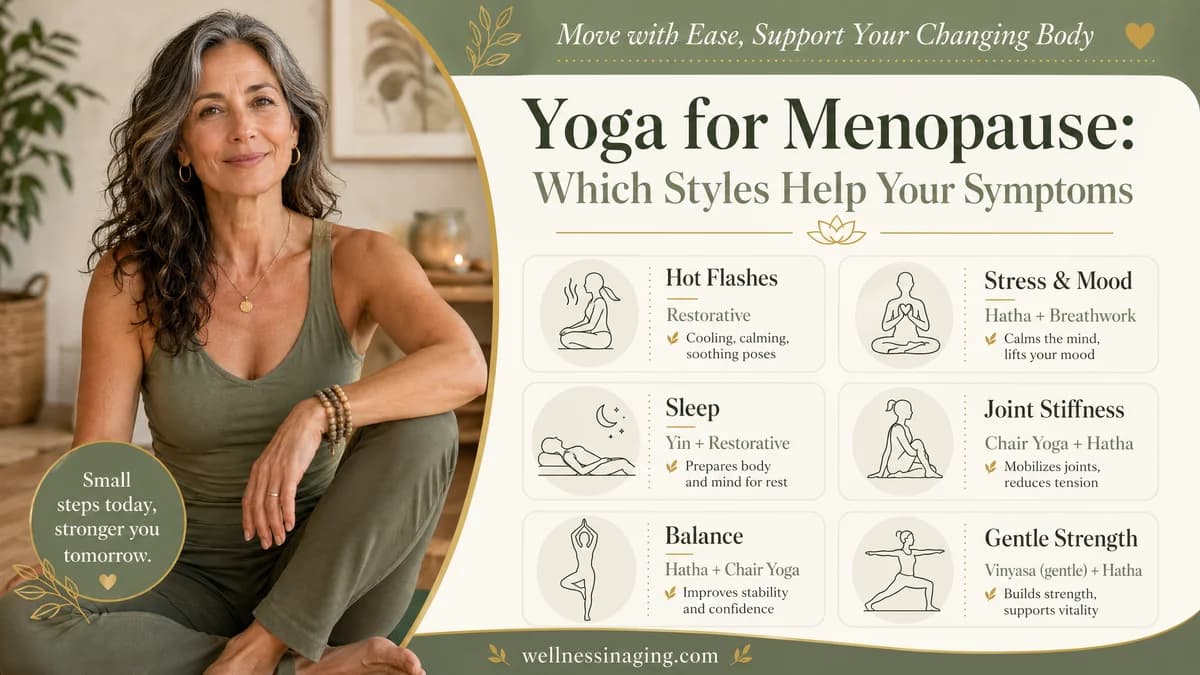
Best Yoga Styles for Menopause: A Matching Guide
Restorative Yoga — Best for: Hot Flashes, Sleep, Anxiety
Slow-paced, passive poses held 5-20 minutes with extensive props (bolsters, blankets, blocks). The focus is deep relaxation and "doing nothing." This style maximizes parasympathetic activation.
Why it works for menopause: Maximum nervous system calming reduces hot flash frequency. Evening practice improves sleep onset. Safe for all fitness levels, including those with joint issues or fatigue.
Studies showing vasomotor symptom reduction often use restorative or similar slow-paced styles.
Key poses: Supported child's pose, legs-up-the-wall, supported reclining bound angle, supported forward fold.
Frequency: 2-3 times weekly, 45-60 minutes.
Yin Yoga — Best for: Joint Stiffness, Flexibility, Anxiety
Passive poses held 3-5 minutes targeting connective tissue — fascia and ligaments. Slower than vinyasa, more active than restorative. Combines physical stretch with meditative awareness.
Why it works for menopause: Directly addresses joint stiffness and reduced flexibility common during menopause. The meditative aspect reduces anxiety and improves body awareness. It's a cooling, grounding practice that doesn't generate excess heat.
Caution: Deep stretching can feel intense. Use props and exit poses early if you feel pain (sensation is fine; sharp pain isn't).
Key poses: Dragon pose (low lunge), sleeping swan (pigeon), caterpillar (seated forward fold), sphinx.
Frequency: 2-3 times weekly, 60-75 minutes.
Gentle Hatha Yoga — Best for: Balance, Strength, Beginners
Traditional yoga balancing poses, breathing, and meditation. "Gentle hatha" maintains a moderate pace with poses held 30-60 seconds. Different from power or advanced hatha.
Why it works for menopause: Builds functional strength and balance (important for fall prevention as bone density declines). More active than restorative, providing mild cardiovascular and metabolic benefits. An excellent entry point for yoga beginners.
What to look for: Classes labeled "gentle," "beginner," or "slow flow" hatha. Avoid "power hatha."
Key poses: Warrior I and II, tree pose, triangle, chair pose, downward dog.
Frequency: 2-4 times weekly, 45-60 minutes.
Iyengar Yoga — Best for: Alignment Precision, Joint Safety, Therapeutic Benefits
Emphasis on precise alignment with extensive prop use. Poses are held longer (1-2 minutes) than in vinyasa. Systematic progression makes this style highly safe.
Why it works for menopause: Props make poses accessible despite limited flexibility or strength. Precise alignment reduces injury risk — important as joints become more vulnerable. Many menopause studies use Iyengar because of its controlled, therapeutic approach. The focus on breathing also complements pelvic floor exercises, which benefit from proper diaphragmatic engagement.
Consideration: May require studio access for full prop setup (blocks, straps, bolsters, chairs, blankets).
Frequency: 2-3 times weekly, 60-90 minutes.
Ready to Start?
Before beginning any new exercise program, it helps to understand where you are in the menopause transition and which symptoms to prioritize. Our free Menopause Starter Guide walks you through symptom assessment, evidence-based intervention options, and how to track what's actually working for your body.
What Doesn't Work: Honest Limitations
Hot Yoga — NOT RECOMMENDED
Room temperatures of 95-105°F directly counteract what menopausal women need. If you're experiencing hot flashes and night sweats, deliberately heating your body makes symptoms worse, not better.
Beyond triggering vasomotor symptoms during and after class, hot yoga increases dehydration risk — already a concern with night sweats. Overheating can worsen fatigue and brain fog.
Verdict: Fundamentally incompatible with menopause symptom management. Choose cooling, restorative styles instead.
Yoga as a Replacement for HRT — INSUFFICIENT
Yoga reduces hot flashes by roughly 20-30%. HRT reduces hot flashes by 75-90%. For women with severe vasomotor symptoms that disrupt quality of life, yoga isn't a substitute for medical treatment.
Yoga also doesn't address vaginal atrophy or bone density loss as effectively as hormone therapy. Think of yoga as complementary to medical treatment when indicated, not a replacement.
Yoga as Primary Bone Density Intervention — WEAK EVIDENCE
One pilot study found 12 minutes of daily yoga over 10 years correlated with increased bone density (Lu et al., 2016). However, this was observational, not a randomized trial.
The loading intensity in yoga is much lower than the mechanical stress required for significant bone building. Strength training at greater than 70% of one-rep max increases bone mineral density by 1-3% (strong evidence). Yoga can't match this.
Verdict: Yoga may slow bone loss but isn't an evidence-based primary intervention for osteoporosis prevention. If bone density is your concern, prioritize strength training after 50 and consider yoga for stress management and flexibility.
Vigorous Daily Practice Without Rest — COUNTERPRODUCTIVE
More isn't always better. Overtraining increases cortisol, which worsens hot flashes, anxiety, and sleep. Post-menopausal recovery capacity is reduced compared to younger years. Risk of joint overuse injuries increases.
Optimal frequency: 3-5 sessions weekly. Daily restorative or gentle practice is fine, but daily vigorous practice isn't recommended. For building complementary strength, see our guide on walking for menopause.
Who This Is For — and Who Should See a Doctor First
Good candidates for yoga as a menopause symptom management tool:
- Mild to moderate hot flashes (not severely disrupting sleep or daily life)
- Anxiety or mood changes during perimenopause or menopause
- Sleep quality issues related to menopause
- Joint stiffness and reduced flexibility
- Women seeking non-pharmacological support alongside (or before considering) medication
See your doctor first if:
- Hot flashes started suddenly before age 40 (may indicate premature ovarian insufficiency)
- You have a history of hormone-sensitive cancer
- Symptoms are worsening despite consistent lifestyle interventions
- You have severe anxiety or depression requiring immediate support
- You've been diagnosed with osteoporosis (yoga isn't sufficient; discuss with your provider)
- You experience unexplained weight loss, severe fatigue, or other concerning symptoms alongside menopause
Free Download: Menopause Starter Guide A practical checklist covering symptoms, tracking, lifestyle changes, and when to see your doctor — everything you need to navigate this transition with confidence. Download free →
A Practical Starting Protocol
Week 1-2: Foundations
- Frequency: 2 times weekly, 20-30 minutes
- Style: Gentle hatha or restorative
- Focus: Learning basic poses, breath awareness, noticing how your body responds
- Resources: YouTube (Yoga with Adriene "Yoga for Beginners") or a local gentle class
Week 3-4: Building Consistency
- Frequency: 3 times weekly, 30-45 minutes
- Add: One 10-15 minute session dedicated to paced breathing
- Goal: Establish a habit; notice how you feel before and after practice
Week 5-8: Deepening Practice
- Frequency: 3-4 times weekly, 45-60 minutes
- Style: Mix restorative (2 times weekly) with gentle hatha or yin (1-2 times weekly)
- Add: Evening restorative session targeting sleep
Month 3+: Maintenance
- Frequency: 3-5 times weekly, 45-75 minutes
- Variety: Restorative, yin, gentle hatha/vinyasa based on what you need that day
- Integration: Yoga becomes one tool in your menopause symptom management approach
What to Expect
Week 1-2: Improved body awareness, mild relaxation after sessions. You may feel physically awkward or inflexible. That's normal.
Week 4-6: Noticeable reduction in anxiety and stress response. Improved sleep onset if you're practicing evenings. Slight improvement in flexibility.
Week 8-12: Measurable reduction in hot flash frequency and severity (if you respond to this intervention). Consistent sleep quality improvements. Mood stabilization and reduced anxiety. Improved joint mobility.
Month 6+: Sustained symptom management. Deeper mind-body connection. Yoga becomes an intuitive self-care tool you can adapt to daily needs.
Yoga Compared to Other Exercise
Yoga isn't competing with strength training or cardio — they address different needs. Here's how they compare for menopause symptoms:
| Benefit | Yoga (Gentle/Restorative) | Strength Training | Aerobic Exercise |
|---|---|---|---|
| Hot flashes | Moderate (20-30% reduction) | Moderate (20-30%) | Moderate-Strong (30-50%) |
| Sleep quality | Moderate-Strong | Moderate | Moderate |
| Anxiety/Mood | Strong (large effect) | Strong (moderate effect) | Strong |
| Bone density | Weak | Strong (1-3% increase) | Moderate (impact activities) |
| Muscle mass | Minimal | Strong | Minimal |
| Joint pain | Moderate | Moderate-Strong | Depends on activity |
| Fall prevention | Moderate (balance) | Strong (lower body strength) | Moderate |
The ideal combination: 2-3 strength training sessions weekly plus 2-3 yoga sessions weekly. Cardio (walking, swimming) as tolerated. For a complete guide to building strength after 50, see our strength training guide.
The Bottom Line
Start with paced breathing today — 10 minutes of slow, deep breathing at 6-8 breaths per minute. This single technique has the strongest evidence of any non-drug hot flash intervention. Add 2-3 restorative or gentle yoga sessions weekly, focusing on evening practice if sleep is your main concern.
Give the practice 8-12 weeks before deciding whether it works for you. Track your symptoms so you have data, not just impressions. If anxiety or mood issues are primary, you may notice improvement within 4-6 weeks.
Yoga complements but doesn't replace strength training for bone and muscle health or medical treatment for severe symptoms. For the anxiety side of menopause, see managing menopause anxiety. For understanding hot flashes more deeply, read our complete hot flash guide.
Your Complete Menopause Toolkit
Yoga is one evidence-based tool for menopause symptom management — but knowing which interventions to try first, how to track progress, and when to escalate to medical options makes all the difference. Download our free Menopause Starter Guide for a complete framework to navigate this transition with confidence.
This content is for informational purposes only and does not constitute medical advice. Always consult with a qualified healthcare provider before starting any new supplement or treatment. Individual results may vary.
References
-
Cramer, H., Lauche, R., Langhorst, J., & Dobos, G. (2012). Effectiveness of yoga for menopausal symptoms: a systematic review and meta-analysis of randomized controlled trials. Evidence-Based Complementary and Alternative Medicine, 2012, 863905.
-
Newton, K. M., Reed, S. D., Guthrie, K. A., et al. (2014). Efficacy of yoga for vasomotor symptoms: a randomized controlled trial. Menopause, 21(4), 339-346.
-
Wang, W. L., Chen, K. H., Pan, Y. C., et al. (2020). The effect of yoga on sleep quality and insomnia in women with sleep problems: a systematic review and meta-analysis. BMC Psychiatry, 20(1), 195.
-
Afonso, R. F., Hachul, H., Kozasa, E. H., et al. (2012). Yoga decreases insomnia in postmenopausal women: a randomized clinical trial. Menopause, 19(2), 186-193.
-
Cramer, H., Anheyer, D., Lauche, R., & Dobos, G. (2018). A systematic review of yoga for major depressive disorder. Journal of Affective Disorders, 213, 70-77.
-
Chattha, R., Raghuram, N., Venkatram, P., & Hongasandra, N. R. (2008). Treating the climacteric symptoms in Indian women with an integrated approach to yoga therapy: a randomized control study. Menopause, 15(5), 862-870.
-
Freedman, R. R., & Roehrs, T. A. (2007). Effects of REM sleep and ambient temperature on hot flash-induced sleep disturbance. Menopause, 14(3 Pt 1), 374-381.
-
Streeter, C. C., Whitfield, T. H., Owen, L., et al. (2010). Effects of yoga versus walking on mood, anxiety, and brain GABA levels: a randomized controlled MRS study. Journal of Alternative and Complementary Medicine, 16(11), 1145-1152.
-
Sternfeld, B., Guthrie, K. A., Ensrud, K. E., et al. (2014). Efficacy of exercise for menopausal symptoms: a randomized controlled trial. Menopause, 21(4), 330-338.
-
Ross, A., & Thomas, S. (2010). The health benefits of yoga and exercise: a review of comparison studies. Journal of Alternative and Complementary Medicine, 16(1), 3-12.
-
Lu, Y. H., Rosner, B., Chang, G., & Fishman, L. M. (2016). Twelve-minute daily yoga regimen reverses osteoporotic bone loss. Topics in Geriatric Rehabilitation, 32(2), 81-87.
-
Moonaz, S. H., Bingham, C. O., Wissow, L., & Bartlett, S. J. (2015). Yoga in sedentary adults with arthritis: effects of a randomized controlled pragmatic trial. Journal of Rheumatology, 42(7), 1194-1202.
-
Gothe, N., Pontifex, M. B., Hillman, C., & McAuley, E. (2013). The acute effects of yoga on executive function. Journal of Physical Activity and Health, 10(4), 488-495.
-
Avis, N. E., Coeytaux, R. R., Isom, S., et al. (2016). Acupuncture, paced respiration, and hot flashes: findings from the Hot Flash Intervention Trial. Menopause, 23(8), 850-858.
Free Download
The Menopause Supplement Evidence Guide
Which supplements have real research behind them. 12 pages, free.
Frequently Asked Questions
Related Articles
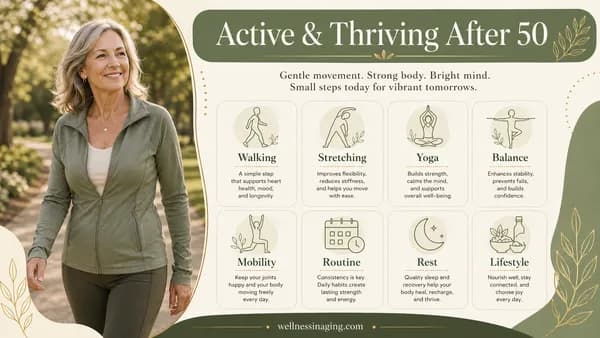
Strength Training After 50 for Women: Evidence-Based Guide
Strength training after 50 builds muscle, protects bones, reverses menopause decline. Phased beginner protocol with sets, reps, protein targets.
Read article →
Probiotics and Menopause: The Gut-Hormone Connection (What the Science Says)
Your gut bacteria directly regulate estrogen metabolism through the estrobolome. Here's what probiotics can and can't do for menopause — with strain-specific evidence for bone health, mood, and vaginal health.
Read article →
Omega-3 for Menopause: What It Helps With (and What It Doesn't)
Omega-3s have strong evidence for mood, joint pain, and heart health during menopause — but NOT for hot flashes. Here's the RCT data, the correct EPA vs DHA dose by symptom, and how to avoid rancid fish oil.
Read article →