
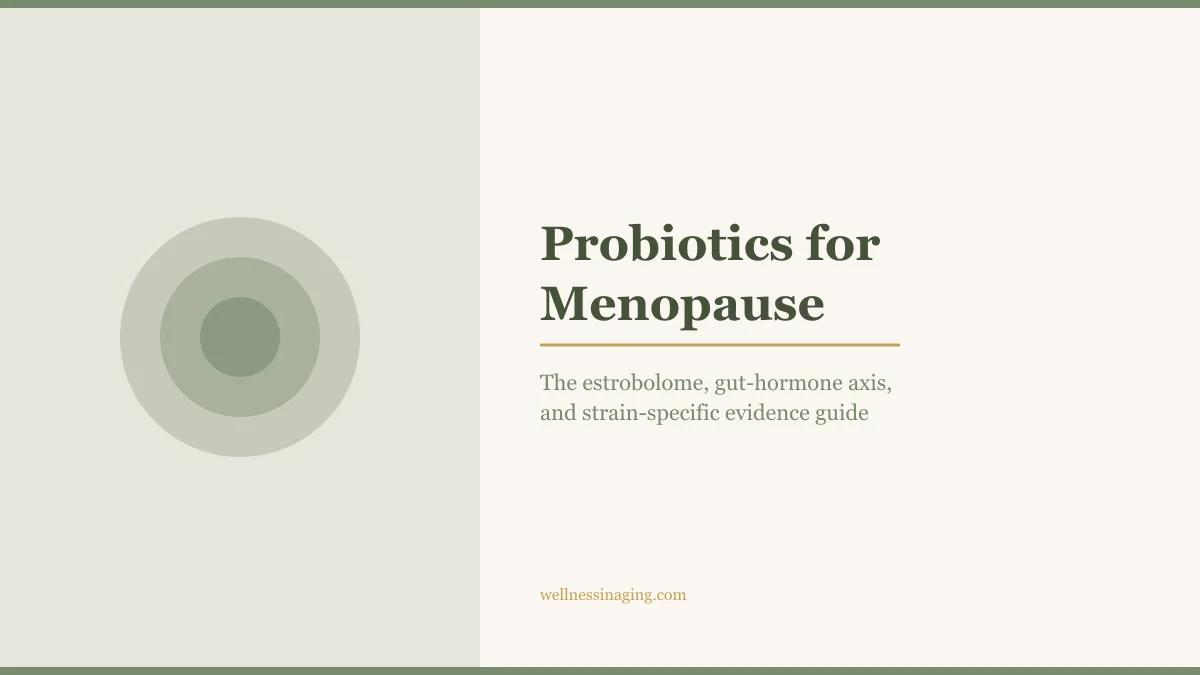
Your gut bacteria are doing something surprising: they're recycling your estrogen. A specialized group of microbes called the estrobolome produces enzymes that determine how much estrogen your body reabsorbs versus excretes. When menopause disrupts your gut microbiome — and it does — you may be losing estrogen faster than your ovaries' declining output alone would suggest.
This isn't alternative medicine speculation. The estrobolome was first identified in peer-reviewed research in 2011, and subsequent studies have confirmed that women with healthier, more diverse gut bacteria maintain higher circulating estrogen levels after menopause. The practical question: can probiotics actually modulate this system in ways that reduce your symptoms?
The answer is more nuanced than supplement marketing suggests. Below: the mechanism behind the gut-hormone connection, evidence ratings for each menopause symptom (from strong to weak), the specific strains that have clinical data behind them, and an honest assessment of what probiotics cannot do.
The Estrobolome: How Your Gut Bacteria Regulate Estrogen
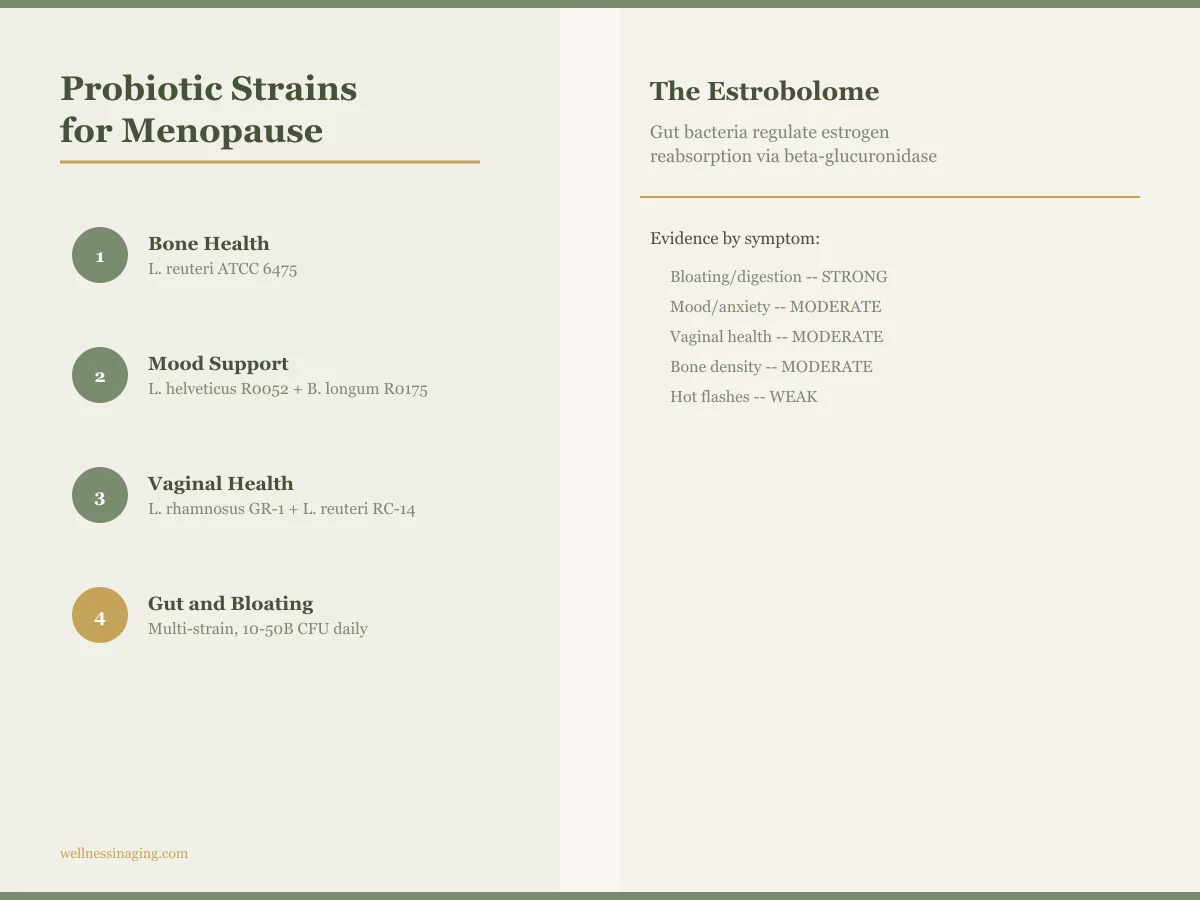
The estrobolome is the collection of gut bacteria capable of metabolizing estrogens. These bacteria produce an enzyme called beta-glucuronidase that determines whether estrogen gets recycled back into your bloodstream or eliminated from your body.
Here's how the process works:
-
Your liver processes estrogen: After estrogen does its job in tissues, the liver attaches a molecule called glucuronic acid to it, creating inactive estrogen-glucuronide.
-
The inactive form enters your gut: This conjugated estrogen is secreted into bile and travels to your intestines for elimination.
-
Gut bacteria decide its fate: Estrobolome bacteria produce beta-glucuronidase, which cleaves off the glucuronic acid. This reactivates the estrogen.
-
Reactivated estrogen is reabsorbed: Free estrogen passes back through your intestinal wall into circulation, where it continues to exert estrogenic effects on your brain, bones, vaginal tissue, and cardiovascular system.
-
Low bacterial diversity means less recycling: With fewer estrobolome bacteria (due to antibiotics, poor diet, or age-related microbiome changes), more estrogen is simply excreted. Less circulates back to tissues that need it.
A 2012 study in the Journal of Translational Medicine confirmed this mechanism in 60 postmenopausal women: those with higher gut microbial diversity had measurably higher circulating estrogen levels (Flores et al., 2012). A 2017 review in Maturitas described the vicious cycle: estrogen decline at menopause changes gut microbiome composition, which further reduces estrogen reabsorption, potentially worsening deficiency symptoms (Baker et al., 2017).
What this means practically: Your gut microbiome may partially explain why some women have severe menopause symptoms while others with similar ovarian function have mild ones. It also suggests that interventions targeting gut health — probiotics, prebiotics, fermented foods — could theoretically modulate symptom severity by optimizing estrogen recycling.
The caveat: while the mechanism is sound and observational data support it, no large randomized controlled trials have yet tested probiotics specifically for estrobolome modulation in menopause. This is emerging science, not established protocol. The clinical evidence we do have is for specific symptoms — and it varies dramatically by symptom.
Evidence by Menopause Symptom: What Probiotics Can (and Can't) Do
Not all probiotic benefits have equal evidence. Here's what the research actually shows for each major menopause concern, with honest evidence ratings.
Vaginal Health — Evidence Rating: MODERATE
The vaginal microbiome shifts dramatically at menopause. A 2014 study in Menopause found that postmenopausal women have significantly lower Lactobacillus abundance, higher vaginal pH (above 4.5 versus below 4.5 in premenopausal women), and more vaginal atrophy symptoms (Brotman et al., 2014).
The mechanism is direct: estrogen maintains vaginal epithelial glycogen, which Lactobacillus bacteria metabolize into lactic acid, keeping pH low and preventing pathogenic bacteria overgrowth. Less estrogen means less glycogen, fewer Lactobacillus, higher pH, and more dysbiosis.
Can oral probiotics help? The evidence is moderate. A 2008 study found that oral Lactobacillus rhamnosus GR-1 plus L. reuteri RC-14 (2 billion CFU daily for 2 months) increased vaginal Lactobacillus colonization and reduced bacterial vaginosis recurrence (Marcone et al., 2008). These bacteria migrate from gut to vagina via the perineal route.
Important distinction: Oral probiotics may support the vaginal microbiome, but they don't reverse structural vaginal atrophy (thinning, loss of elasticity). For that, vaginal estrogen remains the gold standard with 80-90% symptom improvement. Probiotics are adjunctive support, not primary treatment.
Strains with evidence: L. rhamnosus GR-1 + L. reuteri RC-14 (found in RepHresh Pro-B, Jarrow Fem-Dophilus)
Mood and Anxiety — Evidence Rating: MODERATE
The gut-brain axis is bidirectional. About 90% of serotonin is produced in the gut, and gut bacteria influence vagus nerve signaling, inflammatory pathways, and cortisol response. Estrogen withdrawal at menopause contributes to gut dysbiosis, which may worsen mood swings and anxiety that 50-60% of perimenopausal women report.
A 2019 meta-analysis of 10 RCTs (1,349 participants, not menopause-specific) found that probiotics significantly reduced depressive symptoms with a small but real effect size (Liu et al., 2019). A 2011 RCT specifically tested L. helveticus R0052 plus B. longum R0175 in 55 healthy adults for 30 days and found reduced anxiety scores, reduced depression scores, and lower cortisol levels (Messaoudi et al., 2011). This combination is sometimes called a "psychobiotic."
The same 2021 Polish RCT (Łagowska et al.) that tested probiotics for hot flashes also measured mood outcomes and found significant improvement in psychological symptom scores on the Greene Climacteric Scale after 12 weeks.
Timeline: Expect 4-8 weeks for mood improvement — slower than SSRIs (2-4 weeks) but comparable to some natural interventions.
Honest comparison: Probiotics have a small-to-moderate effect on mood (Hedges' g = 0.24). Omega-3 fatty acids (EPA 1-2g) show larger effects for depression (d = 0.6). SSRIs remain first-line for moderate-to-severe depression. Probiotics are best viewed as adjunctive therapy for mild symptoms or as part of a comprehensive approach.
Strains with evidence: L. helveticus R0052 + B. longum R0175 (difficult to source as a combination in the US), B. longum 1714, L. plantarum PS128
Bone Health — Evidence Rating: MODERATE (Strain-Specific)
Bone loss accelerates dramatically after menopause — women can lose 2-3% of bone density per year in the first five years post-menopause. The mechanism linking probiotics to bone health involves reduced inflammation (specifically TNF-alpha, which activates bone-resorbing osteoclasts) and enhanced calcium absorption via short-chain fatty acid production.
A 2018 study in the Journal of Internal Medicine provided the first human RCT evidence. Ninety women aged 75-80 with low bone mineral density took either L. reuteri ATCC PTA 6475 (10 billion CFU) or placebo for 12 months. Results: the probiotic group had 50% less bone loss compared to placebo — they lost 0.5% bone density versus 1.0% in the placebo group (Nilsson et al., 2018).
This is meaningful but requires context: probiotics are not a replacement for calcium (1,200mg/day), vitamin D (2,000 IU), vitamin K2 (100-200 mcg), strength training, or bisphosphonates if you have osteoporosis. L. reuteri ATCC 6475 may be a useful adjunct to a comprehensive bone health strategy.
A 2017 study testing a multi-strain probiotic (different strains, lower dose) found no significant bone density difference, reinforcing that strain specificity matters enormously (Jafarnejad et al., 2017).
Strains with evidence: L. reuteri ATCC PTA 6475 (found in BioGaia Ostofortis — the only commercial product with this bone-validated strain)
Bloating and Digestion — Evidence Rating: MODERATE-STRONG
This is where probiotics have the strongest evidence, even if it's not menopause-specific. Estrogen and progesterone modulate gut motility, and estrogen loss can slow gut transit — 40-50% of perimenopausal women report constipation and bloating.
A 2014 meta-analysis of 43 RCTs (IBS populations) found that probiotics significantly improved bloating with an NNT (number needed to treat) of 7 — meaning 1 in 7 people who take probiotics for bloating will benefit (Ford et al., 2014). This is a clinically meaningful effect. Abdominal pain and global IBS symptoms also improved.
The 2021 Łagowska RCT specifically in postmenopausal women found significant reduction in bloating and constipation in the probiotic group versus placebo.
Timeline: 2-4 weeks for bloating reduction; 4-6 weeks for constipation improvement.
Strains with evidence: Bifidobacterium lactis HN019 (digestive transit), L. plantarum 299v (bloating, IBS), B. infantis 35624 (Align probiotic — strong RCT evidence), VSL#3 (high-potency multi-strain, 450 billion CFU)
Hot Flashes — Evidence Rating: WEAK
This is where expectation management matters most. One RCT exists: a 2021 Polish study of 60 postmenopausal women with moderate-to-severe hot flashes took a multi-strain probiotic (10 billion CFU) or placebo for 12 weeks. Results: 26% reduction in hot flash frequency in the probiotic group versus 8% in placebo — a net benefit of about 18% (Łagowska et al., 2021).
That sounds meaningful until you compare it to alternatives:
- HRT: 75-90% reduction in hot flashes
- Black cohosh: 20-30% reduction
- Soy isoflavones (in equol producers): 20-50% reduction
- Paced breathing: 40-50% reduction in intensity
An 18% reduction from one small trial does not make probiotics a first-line treatment for vasomotor symptoms. If hot flashes are your primary concern, probiotics are not where to start. Read our menopause supplements guide for options with stronger evidence.
Weight Management — Evidence Rating: MIXED
Menopause shifts fat distribution toward visceral (abdominal) fat due to estrogen loss. Gut microbiome composition also changes — reduced diversity, altered bacterial ratios — which correlates with weight gain in observational studies.
Two strain-specific studies show promise:
- L. rhamnosus CGMCC1.3724: Women (not men) lost 70% more weight than placebo during a 12-week diet plus 12-week maintenance (4.4 kg vs 2.6 kg) (Sanchez et al., 2014).
- L. gasseri SBT2055: 4.6% reduction in abdominal visceral fat over 12 weeks, measured by CT scan (Kadooka et al., 2010).
The problem: these are small trials with specific strains. Generic multi-strain probiotics have insufficient evidence for weight loss. Probiotics are not a magic weight-loss pill. The evidence hierarchy for menopause weight management puts strength training, adequate protein, sleep, and anti-inflammatory diet well above probiotics.
Strain-Specific Guide: Matching Symptoms to Validated Strains
"Probiotic" is not a single thing. Different strains have entirely different effects. Lactobacillus rhamnosus GR-1 colonizes the vagina; L. rhamnosus GG colonizes the gut and reduces antibiotic-associated diarrhea; L. rhamnosus CGMCC1.3724 aids weight loss in women. Same species, different functions.
| Symptom | Validated Strain(s) | Dose | Evidence | Notes |
|---|---|---|---|---|
| Vaginal health / UTIs | L. rhamnosus GR-1 + L. reuteri RC-14 | 1-5 billion CFU | MODERATE | Oral probiotics migrate to vagina |
| Mood / Anxiety | L. helveticus R0052 + B. longum R0175 | 3-10 billion CFU | MODERATE | "Psychobiotic" combination |
| Bone health | L. reuteri ATCC PTA 6475 | 10 billion CFU | MODERATE | Only strain with human bone RCT |
| Bloating / IBS | B. infantis 35624 | 1 billion CFU | STRONG | Align probiotic; well-studied |
| Bloating / IBS | L. plantarum 299v | 10 billion CFU | STRONG | Multiple IBS RCTs |
| Constipation | B. lactis HN019 | 1-10 billion CFU | STRONG | Improves gut transit time |
| Visceral fat | L. gasseri SBT2055 | 10 billion CFU | MODERATE | Japanese strain; 4.6% visceral fat reduction |
What to look for on labels: Most "women's health" probiotics list strain species (e.g., "Lactobacillus acidophilus") without the strain designation (e.g., "LA-5"). Without the strain ID, you cannot verify it matches clinical studies. Look for full strain designations and reference to clinical research on the product.
Fermented Foods vs. Supplements: Which Makes More Sense?
You can get probiotics from fermented foods or supplements. Here's how they compare:
Fermented Foods (Daily Foundation)
| Food | CFU per Serving | Notes |
|---|---|---|
| Kefir | 10-50 billion | Higher CFU than yogurt; diverse strains |
| Plain yogurt (live cultures) | 1-10 billion | Must say "live and active cultures" |
| Unpasteurized sauerkraut | 10-100 million | Lower CFU but diverse strains |
| Kimchi | Similar to sauerkraut | Watch sodium intake |
| Kombucha | 1-10 million | Lower CFU; contains beneficial yeasts |
Advantages of fermented foods:
- Cheaper: Kefir costs about $5/week versus $30/month for supplements
- More microbial diversity: Dozens of strains versus 1-10 in supplements
- Whole-food nutrition: Protein, calcium, B vitamins in yogurt and kefir
- Better long-term adherence: Easier to eat yogurt daily than remember a capsule
Advantages of supplements:
- Standardized CFU dose
- Specific strains validated in clinical trials (you can't get L. reuteri ATCC 6475 from kefir)
- Enteric coating protects bacteria from stomach acid
- Travel-friendly
A 2021 Stanford study published in Cell found that a fermented-food diet increased gut microbial diversity and reduced inflammatory markers (IL-6, CRP) more effectively than a high-fiber diet alone in healthy adults (Wastyk et al., 2021).
Practical recommendation: Start with fermented foods as your daily foundation — 1 cup plain kefir or Greek yogurt with live cultures, plus unpasteurized sauerkraut or kimchi 2-3 times weekly. Add a targeted probiotic supplement only if you have a specific symptom (vaginal health, bone concerns, mood issues) where strain-specific evidence exists.
Quality and Dosing: What to Look For
Probiotic quality varies dramatically. ConsumerLab testing found that 20-30% of probiotics have fewer CFU than their labels claim.
CFU: What the Numbers Mean
CFU stands for colony-forming units — the number of live, viable bacteria per dose.
- General health maintenance: 1-10 billion CFU daily
- Therapeutic use (menopause symptoms): 10-50 billion CFU daily
- High-potency (IBS, post-antibiotic): 50-100+ billion CFU daily
Critical detail: Labels often list CFU "at time of manufacture." By the time you consume the product, die-off during shipping and storage may have reduced the count by 10-90%. Look for products that guarantee CFU "through expiration date."
Quality Markers to Check
- Strain designation on label — Not just "Lactobacillus acidophilus" but the full strain ID (e.g., "NCFM" or "LA-5")
- Third-party testing — USP, NSF, or ConsumerLab verification
- CFU guaranteed at expiration — Not just at manufacture
- Proper storage — Refrigerated probiotics generally have higher viability; shelf-stable products use freeze-dried bacteria that reactivate in the gut
- Enteric coating — Protects bacteria from stomach acid (especially important for higher doses)
When to Take Probiotics
The data on timing is mixed. Most evidence suggests taking probiotics with food — the meal provides a buffer against stomach acid. Morning with breakfast is common. Consistency matters more than exact timing.
If you're on antibiotics, take your probiotic 2-3 hours after each antibiotic dose to prevent the antibiotic from killing the probiotic bacteria. Continue for 2-4 weeks after finishing the antibiotic course.
Drug Interactions and Safety
Probiotics are generally safe, but interactions exist.
Antibiotics: Take probiotics 2-3 hours after each antibiotic dose. High-dose probiotics (50-100 billion CFU) during and after antibiotic courses reduce antibiotic-associated diarrhea by approximately 60%.
Immunosuppressants: If you're on cyclosporine, tacrolimus, high-dose corticosteroids, or chemotherapy, consult your physician before starting probiotics. Live bacteria could theoretically cause infection in severely immunocompromised individuals — this is rare but has been reported. Mild immunosuppression (low-dose prednisone for arthritis, for example) is generally not a concern.
Warfarin and Blood Thinners: Certain strains — particularly L. plantarum and Bacillus subtilis — produce vitamin K2, which can antagonize warfarin's anticoagulant effect. If you're on warfarin, monitor your INR more frequently when starting probiotics. Most Lactobacillus and Bifidobacterium strains don't produce enough K2 to interfere.
HRT: No interaction. Probiotics may theoretically enhance HRT effects via estrobolome modulation — this is a potential synergy, not a conflict.
Common Side Effects
Initial gas and bloating for 1-2 weeks is normal as your gut adjusts. Start with half the recommended dose for the first week, then increase. This usually resolves on its own.
What Probiotics Won't Do: Honest Limitations
Probiotics do not replace HRT. The estrobolome hypothesis suggests probiotics might modestly increase estrogen reabsorption, but this effect — even if real — is small compared to the exogenous estrogen provided by hormone therapy. HRT reduces hot flashes by 75-90%, reverses vaginal atrophy, and prevents bone loss. Probiotics cannot replicate these benefits. If your symptoms are severe, probiotics are adjunctive support, not primary treatment.
Probiotics do not eliminate hot flashes. One small RCT showed an 18% net reduction. That's real but clinically modest. If hot flashes are your main concern, consider black cohosh, soy isoflavones (if you're an equol producer), or HRT before probiotics.
Generic multi-strain probiotics are not validated for menopause. Marketing claims like "supports hormonal balance" are vague and unsubstantiated. Unless the product contains specific strains with clinical data (GR-1, RC-14, ATCC 6475, R0052, 35624), you're guessing.
Probiotics do not work immediately. Timeline expectations:
- Bloating: 2-4 weeks
- Mood: 4-8 weeks
- Bone health: 12+ months
- Weight/visceral fat: 12+ weeks
Probiotics do not reverse vaginal atrophy. They may support vaginal microbiome health, but structural changes (thinning, loss of elasticity, dryness) require vaginal estrogen for 80-90% symptom improvement. Probiotics are a microbiome adjunct, not an atrophy treatment.
Quality problems are real. If you buy a cheap, poorly manufactured product with dead bacteria or wrong strains, you'll see no benefit. Third-party testing matters.
The Bottom Line
Probiotics work for specific menopause symptoms — particularly bloating and digestive issues, and with strain-specific support for vaginal health, mood, and bone density. They do not meaningfully reduce hot flashes and cannot replace HRT for severe symptoms.
Your practical starting point: Add 1 cup of plain kefir or Greek yogurt with live cultures to your daily routine. If you have a specific concern — recurrent UTIs, anxiety, bone loss concerns — add a strain-specific probiotic: L. rhamnosus GR-1 + L. reuteri RC-14 for vaginal health, L. helveticus R0052 + B. longum R0175 for mood, or L. reuteri ATCC 6475 for bone support.
Give any probiotic 8-12 weeks before evaluating. If you're taking magnesium for sleep and mood and adding a probiotic, you're building a foundation. If symptoms persist, bring this information to your healthcare provider and discuss whether HRT or prescription options make sense for your situation.
Download the Menopause Starter Guide →
References
-
Flores R, Shi J, Fuhrman B, et al. "Fecal microbial determinants of fecal and systemic estrogens and estrogen metabolite concentrations." Journal of Translational Medicine, 2012; 10: 253.
-
Baker JM, Al-Nakkash L, Herbst-Kralovetz MM. "Estrogen-gut microbiome axis: Physiological and clinical implications." Maturitas, 2017; 103: 45-53.
-
Nilsson AG, Sundh D, Bäckhed F, Lorentzon M. "Lactobacillus reuteri reduces bone loss in older women with low bone mineral density: a randomized, placebo-controlled, double-blind, clinical trial." Journal of Internal Medicine, 2018; 284(3): 307-317.
-
Łagowska K, Malinowska AM, Zawieja B, Zawieja E. "The influence of probiotic supplementation on the severity of menopausal symptoms: a randomized controlled trial." Nutrition Journal, 2021; 20: 89.
-
Messaoudi M, Lalonde R, Violle N, et al. "Assessment of psychotropic-like properties of a probiotic formulation (Lactobacillus helveticus R0052 and Bifidobacterium longum R0175) in rats and human subjects." British Journal of Nutrition, 2011; 105(5): 755-764.
-
Ford AC, Quigley EM, Lacy BE, et al. "Systematic review with meta-analysis: the efficacy of prebiotics, probiotics, synbiotics and antibiotics in irritable bowel syndrome." Alimentary Pharmacology & Therapeutics, 2014; 39(10): 1156-1174.
-
Wastyk HC, Fragiadakis GK, Perelman D, et al. "Gut-microbiota-targeted diets modulate human immune status." Cell, 2021; 184(16): 4137-4153.
-
Brotman RM, Shardell MD, Gajer P, et al. "Association between the vaginal microbiota, menopause status, and signs of vulvovaginal atrophy." Menopause, 2014; 21(5): 450-458.
This content is for informational purposes only and does not constitute medical advice. Always consult with a qualified healthcare provider before starting any new supplement or treatment. Individual results may vary.
Free Download
The Menopause Supplement Evidence Guide
Which supplements have real research behind them. 12 pages, free.
Frequently Asked Questions
Related Articles

Omega-3 for Menopause: What It Helps With (and What It Doesn't)
Omega-3s have strong evidence for mood, joint pain, and heart health during menopause — but NOT for hot flashes. Here's the RCT data, the correct EPA vs DHA dose by symptom, and how to avoid rancid fish oil.
Read article →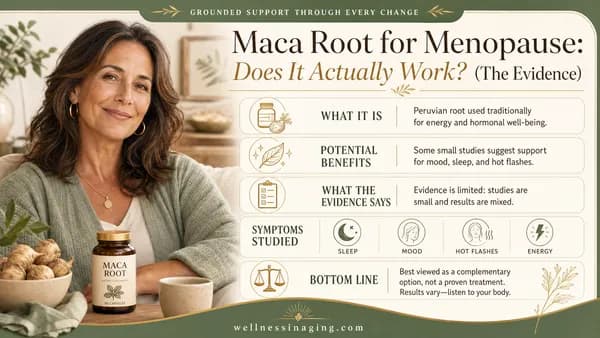
Maca Root for Menopause: Does It Actually Work? (The Evidence)
Maca root is widely promoted for menopause. Here's what the RCTs actually show — what it helps with (libido, mood), what it doesn't (hot flashes), and the correct dose.
Read article →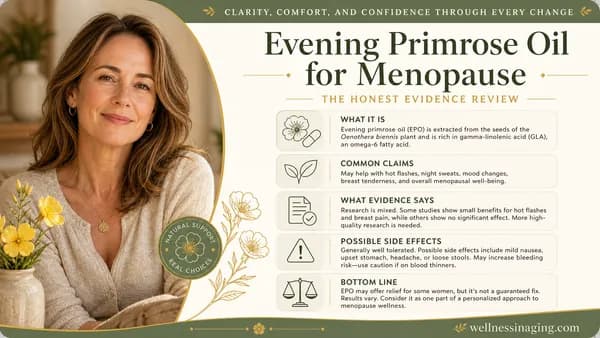
Evening Primrose Oil for Menopause: The Honest Evidence Review
Two high-quality RCTs show evening primrose oil does NOT reduce hot flashes. Here's what the science says, why it's still widely recommended, and what actually works instead.
Read article →