
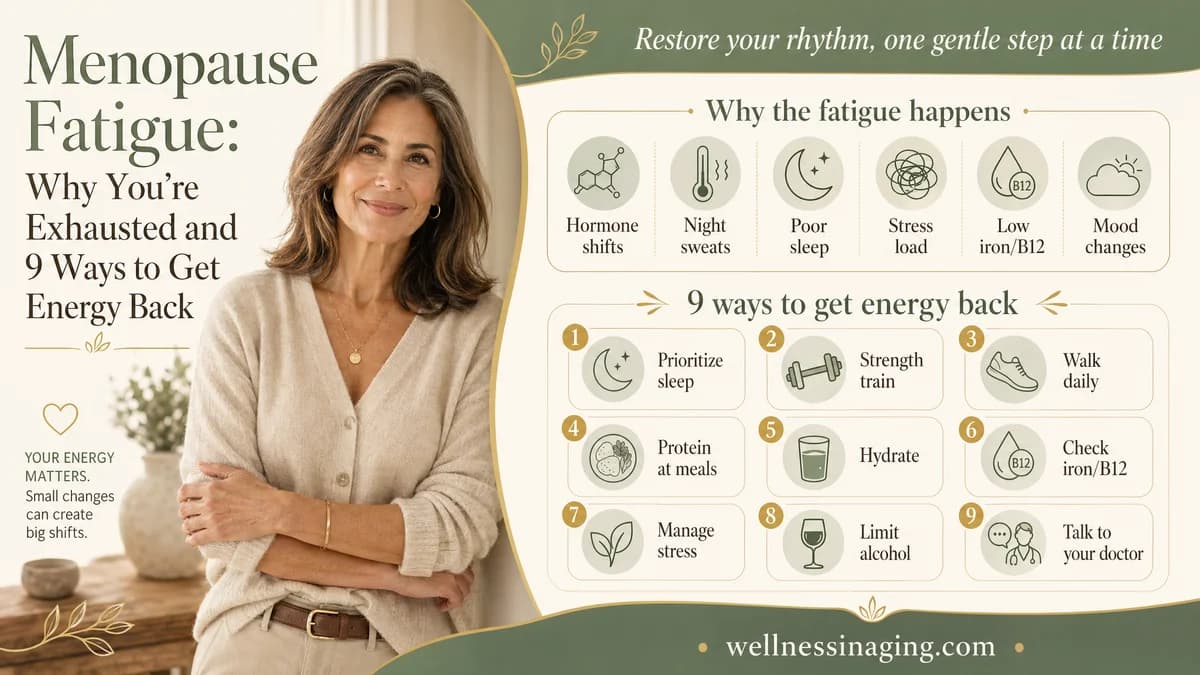
You sleep eight hours and wake up feeling like you haven't slept at all. By mid-afternoon, you're running on fumes, and coffee — which used to be enough — now barely makes a dent. This isn't the tiredness you felt in your thirties after a late night. This is bone-deep exhaustion. The kind that makes your body feel heavy and your brain feel wrapped in fog.
If this sounds familiar, you're experiencing what researchers call menopause-related fatigue, and it affects 80-85% of people during perimenopause. It's the third most common menopausal complaint after hot flashes and sleep disturbances — and unlike those symptoms, fatigue doesn't always have an obvious trigger. You just feel depleted.
There's a specific quality to menopause fatigue that's hard to describe to someone who hasn't felt it. It's not "I stayed up late and need more sleep" tired. It's "I slept fine and still feel like I'm moving through cement" tired.
The good news: menopause fatigue has specific, identifiable causes, and most of them are fixable. Below, you'll find the biological mechanisms driving your exhaustion, how to distinguish menopause fatigue from thyroid or iron problems, and nine evidence-ranked strategies to restore your energy — organized by priority so you know where to start.
Is This Article For You?
This article is for you if you're experiencing persistent fatigue during perimenopause or menopause, especially if it's accompanied by sleep disruption or night sweats. It's also for you if you've tried "everything" but haven't addressed sleep quality or gotten basic blood work (TSH, ferritin).
This article is NOT a substitute for medical evaluation if you have severe fatigue (8/10 or higher), unexplained weight loss, fever, or symptoms worsening over time — see your doctor for those.
Why Menopause Makes You So Tired
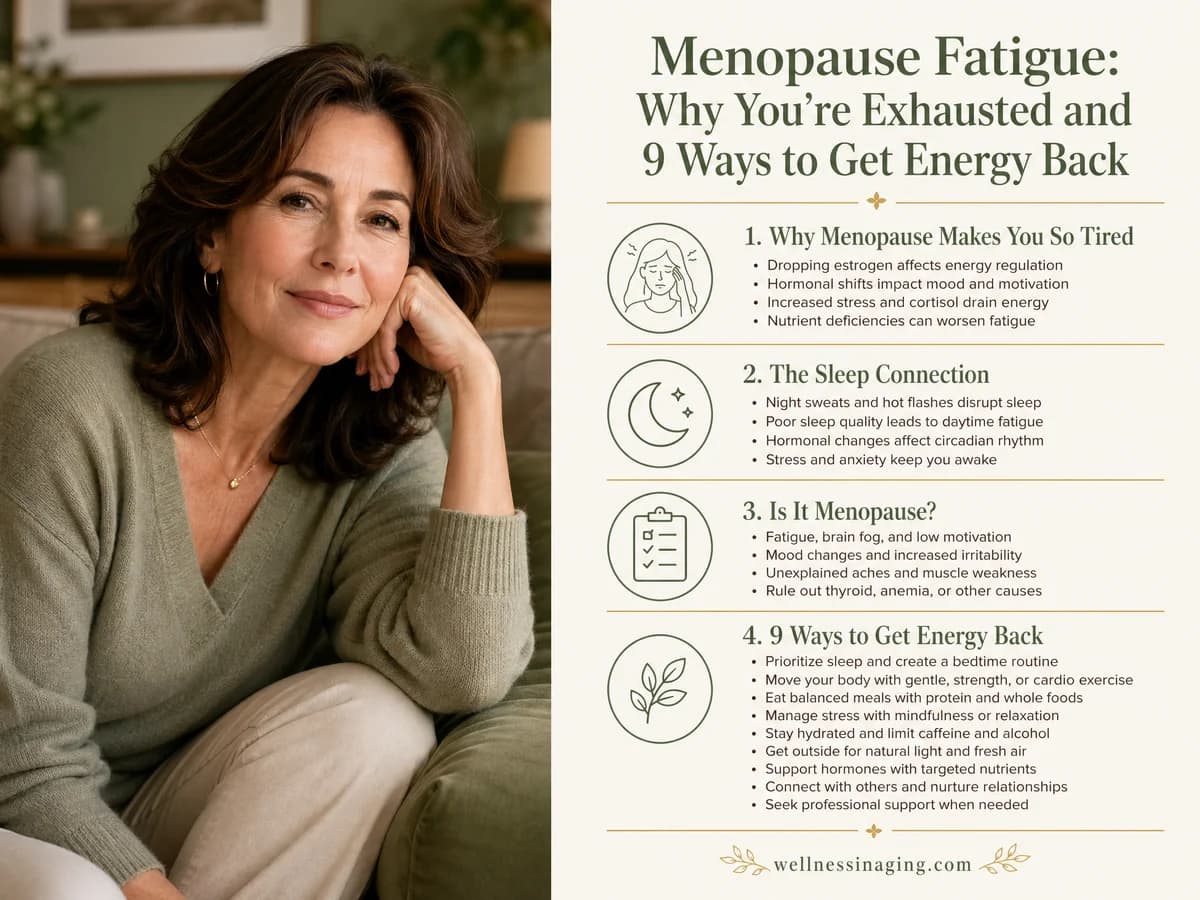
The exhaustion you're feeling isn't psychological. Declining estrogen affects energy production at the cellular level.
Your cells generate energy through mitochondria — the power plants inside every cell. Estrogen receptors sit directly on mitochondria, and estrogen enhances their efficiency. When estrogen declines during perimenopause, mitochondrial function drops. Research from Roberta Brinton's lab at the University of Arizona found that estrogen withdrawal reduces brain glucose metabolism by 20-25% (Brinton et al., 2015). Less efficient mitochondria means less ATP — the energy currency your body runs on.
But the mechanism goes deeper. Estrogen also stimulates the creation of new mitochondria through a pathway called PGC-1α activation. With less estrogen, you're not just running your existing power plants less efficiently — you're building fewer new ones.
This cellular energy deficit shows up as whole-body fatigue: difficulty getting out of bed, mental fog by early afternoon, and that persistent feeling that you're operating at 60% capacity.
The Sleep-Fatigue Connection: Why It's #1
For most people with menopause fatigue, the primary culprit isn't directly hormonal — it's sleep disruption.
Night sweats affect 44% of perimenopausal women, and each episode fragments your sleep architecture. You wake briefly (sometimes without remembering), your body cools down, and you drift back to sleep — only for it to happen again 2-3 hours later. A 2008 study in Sleep Medicine found that 85% of perimenopausal women with severe night sweats report clinically significant fatigue, compared to just 35% of those without night sweats (Kravitz et al., 2008).
Here's what makes this particularly damaging: night sweats preferentially disrupt slow-wave sleep — the deep, restorative phase where your body repairs tissue, consolidates memory, and clears metabolic waste from the brain. You can sleep for 8 hours, but if you're only getting 4-5 hours of slow-wave sleep instead of 6-7, you'll wake up exhausted.
Poor sleep elevates evening cortisol, which delays sleep onset the next night. Chronic sleep deprivation reduces motivation for physical activity. Less activity means worse sleep quality. The cycle perpetuates itself.
Sleep optimization is the first intervention — not the fifth. Research from JAMA Internal Medicine showed that addressing sleep alone improved fatigue scores by 40% over 12 weeks (McCurry et al., 2016). If you're skeptical that "just sleeping better" could make that much difference, consider: many people who think they have hormonal fatigue actually have treatable sleep-disruption fatigue.
Is It Menopause — Or Something Else?
Before you assume your fatigue is purely hormonal, two conditions need to be ruled out. Both are common in perimenopausal women, both cause profound fatigue, and both are treatable with simple interventions.
| Condition | Key Distinguishing Symptoms | Blood Test | What Confirms It |
|---|---|---|---|
| Hypothyroidism | Cold intolerance (always cold, not hot flashing), unexplained weight gain, severe constipation, dry skin, hair loss | TSH | TSH >4.5 mIU/L |
| Iron-deficiency anemia | Breathlessness climbing stairs, rapid heartbeat with mild exertion, pale skin/conjunctiva, restless legs at night | Ferritin, CBC | Ferritin <30 ng/mL or Hemoglobin <12 g/dL |
| Menopause-related fatigue | Variable fatigue linked to poor sleep nights, hot flashes/night sweats present, improves with sleep optimization | Normal TSH and ferritin | Diagnosis of exclusion |
| Depression | Anhedonia (loss of pleasure in activities), persistent low mood >2 weeks, hopelessness, changes in appetite | Clinical screening | PHQ-9 score >10 |
Thyroid dysfunction affects 10-15% of women over 45, and fatigue is its most common symptom — 90% of hypothyroid patients report it. The Colorado thyroid prevalence study found that even subclinical hypothyroidism (TSH 4.5-10 mIU/L) is associated with fatigue and reduced quality of life (Canaris et al., 2000). If your TSH is elevated, levothyroxine treatment typically resolves fatigue within 6-12 weeks.
Iron deficiency is particularly common during perimenopause because of heavy, erratic periods. Heavy menstrual bleeding affects 25-30% of perimenopausal women, and 10-15% develop iron-deficiency anemia as a result. But here's the critical point: you can have fatigue-causing iron deficiency without anemia. A ferritin level below 30 ng/mL causes fatigue even if your hemoglobin is normal. A 2012 BMJ study found that iron supplementation in women with ferritin below 50 ng/mL reduced fatigue by 50% over 12 weeks (Vaucher et al., 2012).
I've talked to women who spent years assuming their exhaustion was "just menopause" only to discover their ferritin was at 12 or their TSH was at 8. The blood test was life-changing. Two cheap tests can rule out or identify completely treatable causes.
The Blood Test Checklist
Ask your doctor for these tests if you have severe or persistent fatigue:
- TSH (thyroid-stimulating hormone) — rules out hypothyroidism
- Ferritin — rules out iron deficiency (more sensitive than hemoglobin alone)
- CBC (complete blood count) — rules out anemia
- Vitamin B12 — deficiency increases after age 50 due to reduced stomach acid
- Vitamin D — deficiency common and associated with fatigue
9 Evidence-Ranked Strategies to Restore Energy
The following interventions are organized by priority — not alphabetically, not by popularity, but by the order that makes clinical sense. Start with #1 before adding #5.
1. Fix Your Sleep First — Evidence: STRONG
If night sweats are fragmenting your sleep, treating the fatigue without treating the sleep is like mopping the floor while the faucet runs.
What to do:
- CBT-I (Cognitive Behavioral Therapy for Insomnia) is the gold standard. Effect size in clinical trials is 1.0-1.4 — comparable to prescription sleep medications, with longer-lasting results. Digital options: Sleepio, Somryst, CBT-I Coach app.
- If night sweats are the primary sleep disruptor, prioritize cooling interventions: bedroom temperature 60-67°F, moisture-wicking bedding, cooling mattress pad.
- Magnesium glycinate 200-400mg before bed improves sleep quality (PSQI improvement of 1.5-2.5 points in studies).
- Fixed wake time — more important than bedtime. Anchoring your circadian rhythm improves sleep efficiency.
Timeline: Sleep quality improvements visible in 2-4 weeks. Fatigue reduction follows in 4-6 weeks.
2. Get Your Thyroid Tested — Evidence: STRONG
Simple, cheap, and could explain everything.
What to do:
- Request TSH as the first-line screen. If elevated (>4.5 mIU/L), follow up with Free T4 and Free T3.
- Consider testing if TSH is 2.5-4.5 mIU/L and you have significant symptoms.
- If hypothyroid: levothyroxine 50-100 mcg/day, titrated to TSH target of 0.5-2.5 mIU/L.
Timeline: Fatigue improvement in 4-6 weeks after starting treatment, full resolution by 8-12 weeks.
3. Check Your Iron and Ferritin — Evidence: STRONG (if deficient)
Especially important if you've had heavy periods.
What to do:
- Test ferritin (not just hemoglobin). Threshold: ferritin below 30 ng/mL indicates deficiency.
- If deficient: Ferrous bisglycinate 25-50mg elemental iron daily (better tolerated than ferrous sulfate). Take with vitamin C to enhance absorption.
- Do NOT supplement iron without testing. Excess iron causes oxidative stress and cardiovascular risk.
Timeline: Fatigue improves in 4-6 weeks. Ferritin normalizes in 8-12 weeks.
4. Exercise — Yes, Even When You're Exhausted — Evidence: STRONG
This is where the paradox lives: exercise temporarily depletes energy but chronically increases your baseline energy capacity.
I know how absurd it sounds to be told to exercise when you can barely get through the afternoon without lying down. But the research here is unambiguous, and the mechanism makes sense once you understand it.
Why it works:
- Exercise stimulates mitochondrial biogenesis — the creation of new mitochondria. Over 12 weeks, this increases your cellular ATP capacity by 15-30%.
- Exercise increases slow-wave sleep (the deep, restorative phase you're missing).
- Exercise normalizes HPA axis function, improving morning cortisol awakening response.
A 2007 study in Annals of Behavioral Medicine found that a 4-month exercise program reduced fatigue scores by 48% in perimenopausal women, compared to 12% in a stretching-only control group (Elavsky & McAuley, 2007).
What to do:
- Start small if severely fatigued: 10-minute walks, gradually building to 30-45 minute sessions.
- Target: 150 minutes/week of moderate aerobic activity (brisk walking, cycling, swimming).
- Add resistance training: 2-3x/week to preserve muscle mass and boost resting metabolic rate.
- Timing: Morning or early afternoon exercise is best for fatigue. Evening exercise may delay sleep onset.
Timeline: Acute energy boost within 1-2 hours post-exercise. Chronic baseline improvement visible in 3-4 weeks, peaks at 8-12 weeks.
5. Optimize Your Protein Intake — Evidence: MODERATE
Protein does three things for energy: it fuels mitochondrial function, preserves muscle mass (which declines rapidly after 40), and stabilizes blood sugar (preventing the glucose crashes that cause afternoon slumps).
What to do:
- Target: 1.2-1.6g protein per kg body weight (or 0.5-0.7g per pound). For a 150 lb (68 kg) woman, that's 80-110g daily.
- Distribution matters: 25-30g per meal, spread across breakfast, lunch, and dinner. Not all at dinner.
- Practical example: 3 eggs + Greek yogurt (breakfast: 30g), chicken breast or tofu (lunch: 30g), salmon or legumes (dinner: 35g).
- See our anti-inflammatory diet guide for more meal planning strategies.
Timeline: Blood sugar stabilization within 1-2 weeks. Muscle-preservation effects over 8-12 weeks.
6. Add Magnesium Glycinate — Evidence: MODERATE
Magnesium is required for over 300 enzymatic reactions, including ATP synthesis. It also improves sleep quality and reduces cortisol — both of which indirectly boost energy.
What to do:
- Form: Magnesium glycinate 200-400mg elemental magnesium (best absorbed, least laxative effect). Alternative: magnesium threonate 144mg (crosses blood-brain barrier, may help brain fog).
- Timing: 1-2 hours before bed.
- Note: 50-60% of US women consume less than the RDA (320mg/day), and stress increases magnesium loss.
Timeline: Sleep improvements in 2-4 weeks. Energy improvements in 4-8 weeks.
7. Test B12 Before Supplementing — Evidence: MODERATE (if deficient)
B12 deficiency prevalence increases after 50 because stomach acid (needed for B12 absorption) declines with age. Deficiency causes fatigue, weakness, and neurological symptoms.
What to do:
- Test first: Serum B12 below 200 pg/mL indicates deficiency. Borderline: 200-400 pg/mL.
- If deficient: Methylcobalamin 1000 mcg/day orally, or B12 injections 1000 mcg weekly x4 weeks then monthly.
- Skip the megadose B-complex: If your B12 is normal, high-dose supplements don't boost energy. Marketing hype exceeds evidence.
Timeline: 4-8 weeks for fatigue improvement if deficient.
8. Consider Ashwagandha KSM-66 — Evidence: MODERATE
Ashwagandha modulates the HPA axis, reducing cortisol and improving stress resilience. Clinical trials show it reduces cortisol by 14-28% and improves energy/vitality scores by 15-25%.
What to do:
- Dosage: 300-600mg/day standardized extract (KSM-66 or Sensoril, 5% withanolides).
- Safety: Generally well-tolerated. Avoid during pregnancy. Possible interactions with thyroid medications.
Timeline: 4-8 weeks for noticeable effects.
9. HRT for Sleep-Driven Fatigue — Evidence: MODERATE (indirect)
If night sweats are the primary driver of your poor sleep (and therefore your fatigue), HRT reduces them by 70-80% — which improves sleep, which reduces fatigue. The fatigue benefit is indirect but substantial.
What to do:
- Transdermal estradiol 0.05-0.1mg + oral micronized progesterone 100-200mg at bedtime (if uterus intact).
- Discuss with your healthcare provider. Best candidates: women with moderate-severe night sweats, within 10 years of menopause onset, no contraindications.
Timeline: Fatigue improvement in 4-8 weeks, following reduction in night sweats and sleep improvement.
What Doesn't Work (Save Your Money)
Caffeine Dependency — COUNTERPRODUCTIVE
Caffeine masks fatigue without addressing root causes. Worse: its 5-6 hour half-life means afternoon coffee disrupts nighttime sleep, perpetuating the cycle. A 2013 study in the Journal of Clinical Sleep Medicine found that caffeine consumed even 6 hours before bed reduced total sleep time by 41 minutes (Drake et al., 2013).
Verdict: Limit to morning only (before noon). Max 200-300mg/day (2 cups). If you need caffeine to function, investigate the underlying cause.
Energy Drinks — NOT RECOMMENDED
Rapid glucose spike + high-dose caffeine = jitteriness followed by crash. Regular use creates tolerance and withdrawal headaches.
Iron Without Testing — POTENTIALLY HARMFUL
Unnecessary iron supplementation causes oxidative stress and increases cardiovascular risk in postmenopausal women. Never supplement without confirmed deficiency (ferritin below 30 ng/mL).
"Adrenal Support" Supplements — WASTE OF MONEY
"Adrenal fatigue" is not a recognized medical diagnosis. The Endocrine Society's 2016 position statement: "No scientific proof that adrenal fatigue exists." Products containing bovine adrenal extract, licorice root, or glandulars have no clinical evidence for fatigue and cost $30-60/month.
What's actually happening: If you have fatigue, flattened cortisol rhythms, and stress-related symptoms, you have HPA axis dysregulation — not "burned-out adrenals." The fix is sleep, exercise, and stress management, not glandulars.
Excessive Napping — MIXED
Naps longer than 30 minutes reduce nighttime sleep pressure, making insomnia worse. If you're chronically napping, it's a sign your nighttime sleep needs work — not a solution. Limit to 20-30 minute power naps before 3pm if needed.
The Bottom Line
Start with sleep. If night sweats are fragmenting your rest, address them first — cooling interventions, CBT-I, or HRT if appropriate. Get blood work for TSH and ferritin; these two tests can identify causes that explain everything and are completely treatable. Once sleep and metabolic factors are addressed, add regular exercise (the fatigue paradox is real — push through the initial resistance) and optimize protein intake.
Most people see significant improvement within 8-12 weeks of addressing the root causes. The fatigue you're feeling isn't permanent, and it isn't "just aging." It has mechanisms, and those mechanisms have solutions.
Download the Menopause Starter Guide → — a free resource covering fatigue, sleep optimization, and the exact blood tests to request from your doctor.
Want evidence-based menopause guidance delivered monthly? Subscribe to our newsletter for research-backed strategies that actually work.
For practical support managing menopause symptoms, see our guide to night sweats or menopause sleep strategies.
This content is for informational purposes only and does not constitute medical advice. Always consult with a qualified healthcare provider before starting any new supplement or treatment. Individual results may vary.
References
-
Brinton, R. D., et al. (2015). "Perimenopause as a neurological transition state." Frontiers in Neuroendocrinology, 36, 21-28.
-
Kravitz, H. M., et al. (2008). "Sleep disturbance during the menopausal transition in a multi-ethnic community sample of women." Sleep Medicine, 9(7), 979-986.
-
McCurry, S. M., et al. (2016). "Telephone-based cognitive behavioral therapy for insomnia in perimenopausal and postmenopausal women with vasomotor symptoms." JAMA Internal Medicine, 176(7), 913-920.
-
Canaris, G. J., et al. (2000). "The Colorado thyroid disease prevalence study." Archives of Internal Medicine, 160(4), 526-534.
-
Vaucher, P., et al. (2012). "Effect of iron supplementation on fatigue in nonanemic menstruating women with low ferritin: a randomized controlled trial." BMJ, 345, e7822.
-
Elavsky, S., & McAuley, E. (2007). "Physical activity and mental health outcomes during menopause: a randomized controlled trial." Annals of Behavioral Medicine, 33(2), 132-142.
-
Soares, C. N., et al. (2001). "Efficacy of estradiol for the treatment of depressive disorders in perimenopausal women." Archives of General Psychiatry, 58(6), 529-534.
-
Drake, C., et al. (2013). "Caffeine effects on sleep taken 0, 3, or 6 hours before going to bed." Journal of Clinical Sleep Medicine, 9(11), 1195-1200.
Free Download
The Menopause Supplement Evidence Guide
Which supplements have real research behind them. 12 pages, free.
Frequently Asked Questions
Related Articles
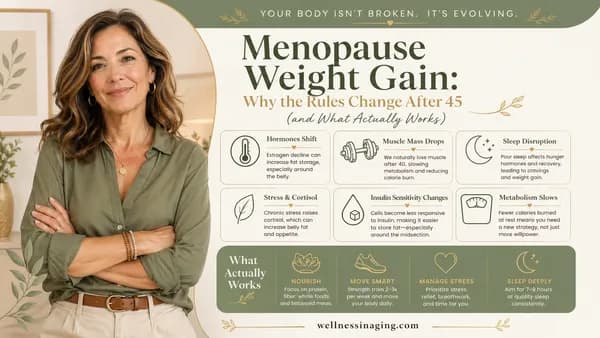
Menopause Weight Gain: Why the Rules Change After 45 (and What Actually Works)
Why menopause causes belly fat even when weight stays stable — the hormonal mechanism behind visceral fat redistribution and evidence-based strategies that work differently after 45.
Read article →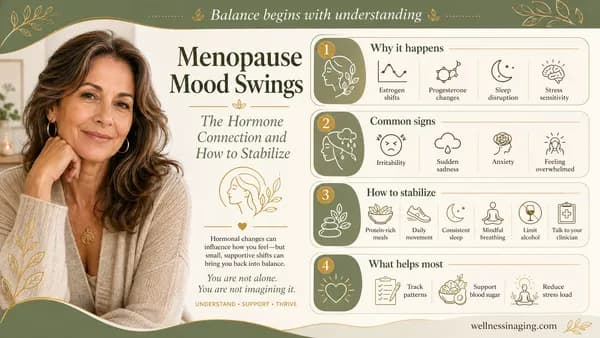
Menopause Mood Swings: The Hormone Connection and How to Stabilize
Why estrogen fluctuations cause dramatic mood changes during menopause — and evidence-based approaches from lifestyle to supplements to therapy.
Read article →
Joint Pain During Menopause: The Estrogen Connection and Natural Relief
Why declining estrogen causes joint pain during menopause — and which supplements, exercises, and lifestyle changes have clinical evidence behind them.
Read article →