
You reach for the coffee jar first thing in the morning, and your hands refuse to cooperate. Your fingers feel swollen, stiff, locked in place. You run them under warm water, flex them open and closed for a few minutes, and eventually they loosen up. By midday, you've almost forgotten about it — until tomorrow morning, when it happens again.
The surprise of waking up with stiff hands that won't grip properly catches most women off guard. This is not rheumatoid arthritis. Your blood tests came back normal. Your doctor said there's no swelling, no redness, nothing alarming. And yet the aching in your hands, wrists, knees, and shoulders is real. It appeared around the same time your periods became irregular. Nobody warned you that menopause could feel like this.
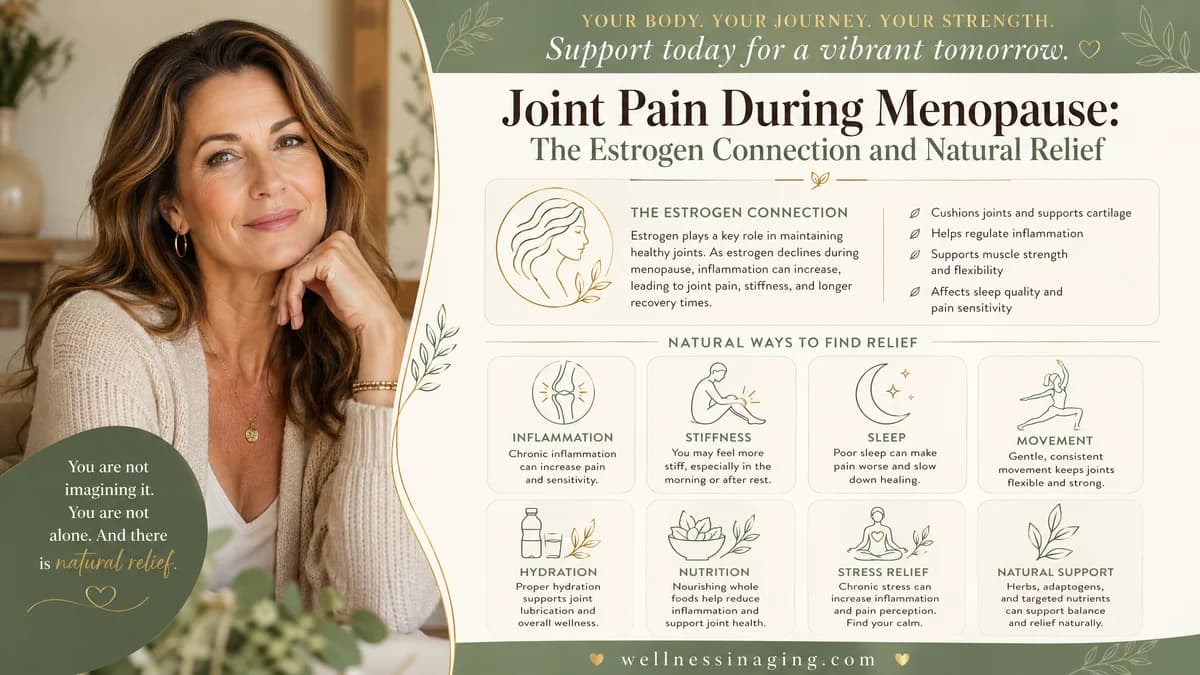
Joint pain affects 50-60% of women during perimenopause and postmenopause, making it one of the top three symptoms alongside hot flashes and sleep disruption (North American Menopause Society). Below: the biological mechanism connecting estrogen to your joints, a clinical comparison table to distinguish menopause arthralgia from actual arthritis, and supplements and lifestyle approaches ranked by evidence strength.
Is This Article For You? This guide is for women experiencing new joint stiffness or aching that coincides with perimenopause, women wondering if their joint pain signals rheumatoid arthritis (and how to tell the difference), and women who want to know which supplements and lifestyle changes have actual clinical evidence — not just marketing hype.
How Estrogen Protects Your Joints — And What Happens When It Declines
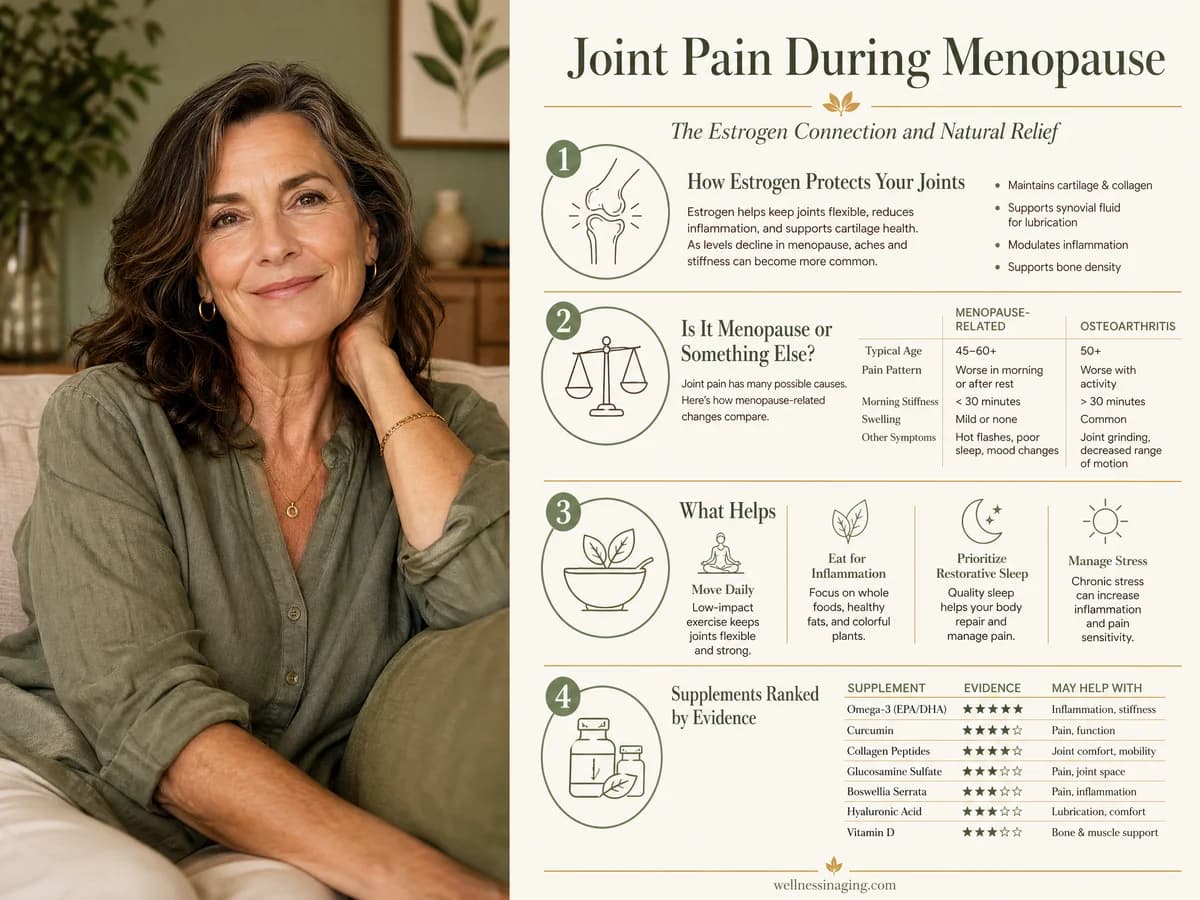
Your joints are not passive hinges. They are living tissue, constantly remodeling, and they depend on estrogen more than most women realize. Estrogen receptors (ERα and ERβ) are present throughout your joint structures: in the synovial membrane that produces lubricating fluid, in the articular cartilage that cushions bone-on-bone contact, in the ligaments and tendons that hold everything together, and in the subchondral bone just beneath the cartilage surface.
When estrogen declines during perimenopause, these tissues lose their protective signaling. The consequences cascade through multiple pathways.
Increased inflammation. Estrogen normally suppresses pro-inflammatory cytokines — IL-1β, IL-6, and TNF-α. When estrogen drops, these inflammatory molecules rise. A 2002 review in Endocrine Reviews documented significant increases in inflammatory cytokine activity after menopause. These cytokines directly damage cartilage and activate pain receptors in joint tissue.
Less synovial fluid, and lower quality. Estrogen stimulates hyaluronic acid synthesis — the molecule that gives synovial fluid its viscosity. Without adequate estrogen, synovial fluid becomes thinner and less effective at cushioning. This is why joints feel "creaky" or "dry" during menopause, particularly in the morning before movement redistributes what fluid remains.
Collagen breakdown accelerates. Women lose 10-15% of their collagen in the first five years after menopause (Brincat et al., Obstetrics & Gynecology, 1987). The same type II collagen that keeps skin firm also forms the structural support of cartilage. As collagen degrades, cartilage thins. The cushion between bones narrows.
Muscle loss compounds the problem. Estrogen supports muscle protein synthesis. As muscle mass declines (sarcopenia), the muscles around your joints provide less stabilization. Weak quadriceps means more strain on knee cartilage. Weak rotator cuff muscles means more shoulder pain. The joint itself may be intact, but it's working harder without adequate muscular support. This muscle weakness often contributes to menopause weight gain, particularly around the midsection, which further increases mechanical load on weight-bearing joints.
Pain perception changes. Estrogen modulates pain pathways via serotonin and endorphin systems. Lower estrogen means a lower pain threshold — the same mechanical stimulus that barely registered before menopause now feels more painful. This central sensitization also explains why chronic pain conditions like fibromyalgia often worsen during this transition.
When joint pain arrives alongside hot flashes, sleep disruption, mood swings, and brain fog, it can feel like everything is falling apart at once. It's not. Your body is recalibrating to a new hormonal baseline, and joint tissue is one of the systems affected by that shift.
Is It Menopause or Something Else? A Clinical Comparison
One of the most common fears is that joint pain signals rheumatoid arthritis or another serious condition. Here's how to distinguish menopause-related arthralgia from other causes:
| Feature | Menopause Arthralgia | Rheumatoid Arthritis | Osteoarthritis |
|---|---|---|---|
| Pattern | Bilateral, symmetrical, generalized aching | Bilateral, symmetrical, with visible swelling | Asymmetrical, specific joints (often knees, hips, hands) |
| Morning stiffness | Under 30-60 minutes, improves with movement | Over 1 hour, persists | Improves quickly, worsens with use |
| Joint appearance | Normal — no swelling, warmth, or redness | Swollen, warm, sometimes red | May show bony enlargement (Heberden's nodes on fingers) |
| Inflammatory markers | Normal ESR and CRP | Elevated ESR and CRP | Usually normal |
| Antibody tests | Negative RF and anti-CCP | Often positive RF or anti-CCP | Negative |
| X-ray findings | Usually normal | Erosions, joint space narrowing | Bone spurs, cartilage loss visible |
| Response to movement | Gets better with gentle activity | May improve somewhat | Gets worse with prolonged use |
Source: North American Menopause Society guidelines; American College of Rheumatology criteria
If your morning stiffness resolves within 30-60 minutes, your joints look normal (no swelling or redness), and your blood tests are unremarkable, you're most likely dealing with menopause-related arthralgia rather than an autoimmune or degenerative condition. However, any of the red flags in the "When to See a Doctor" section below warrant further evaluation.
What Helps: Supplements Ranked by Evidence
Not all supplements marketed for joint health have equal evidence behind them. Here's what the clinical research actually shows, ranked by strength of evidence.
Omega-3 Fatty Acids (EPA + DHA) — Evidence: STRONG
Omega-3s work by inhibiting COX-2 and 5-LOX enzymes, reducing the prostaglandins and leukotrienes that drive joint inflammation. A 2020 meta-analysis in the Mediterranean Journal of Rheumatology reviewed data from over 2,000 participants with inflammatory joint pain and found significant reductions in pain intensity and morning stiffness.
Dosage: 2,000-3,000mg combined EPA + DHA daily. This typically requires 2-3 fish oil capsules, depending on concentration. Look for products listing EPA and DHA amounts separately, not just "fish oil."
Form: Triglyceride or ethyl ester forms both work. Take with a fat-containing meal for better absorption.
Timeline: 8-12 weeks for noticeable improvement. Don't expect results in the first week.
Who benefits most: Women with inflammatory-pattern joint pain — bilateral, symmetrical, worse in the morning.
Caution: Omega-3s have a mild blood-thinning effect. If you take anticoagulants (warfarin, aspirin), consult your doctor before adding high-dose fish oil.
Vitamin D3 — Evidence: STRONG (If Deficient)
Vitamin D receptors exist in muscle and bone tissue. Deficiency causes bone pain and muscle aches that mimic joint pain. A 2017 randomized controlled trial in the Journal of Clinical and Diagnostic Research found significant pain reduction — but only in women whose baseline vitamin D was below 20 ng/mL.
Dosage:
- Deficient (under 20 ng/mL): 5,000-10,000 IU daily for 8-12 weeks, then 2,000-4,000 IU maintenance
- Insufficient (20-30 ng/mL): 2,000-4,000 IU daily
- Sufficient (above 30 ng/mL): No additional benefit for joint pain
Critical point: Get your serum 25(OH)D level tested before supplementing. If you're not deficient, vitamin D won't help your joint pain.
Co-factor: Take with vitamin K2 (100-200 mcg MK-7) to prevent calcium from depositing in blood vessels instead of bones.
Curcumin (Turmeric Extract) — Evidence: MODERATE-STRONG
Curcumin inhibits NF-κB, a master inflammatory switch that controls IL-1β and TNF-α production. A 2016 meta-analysis in the Journal of Medicinal Food found curcumin comparable to NSAIDs (ibuprofen, naproxen) for pain reduction in osteoarthritis. Like omega-3s, curcumin fits well within an anti-inflammatory diet for menopause.
Dosage: 1,000-1,500mg curcuminoids daily.
Critical absorption requirement: Standard turmeric powder is poorly absorbed (only 3-5% bioavailability). You need an enhanced formulation:
- Curcumin with piperine (BioPerine): Black pepper extract increases absorption 2,000%
- Meriva (phospholipid complex): Bound to phosphatidylcholine
- BCM-95 (turmeric oil complex): Contains essential oils from turmeric
Timeline: 6-8 weeks for anti-inflammatory effects.
Caution: Avoid if on blood thinners. May cause GI upset at high doses.
Collagen Peptides — Evidence: MODERATE
Collagen peptides provide the amino acid building blocks (glycine, proline, hydroxyproline) that cartilage needs to repair itself. A 2019 meta-analysis in the International Journal of Medical Sciences reviewed 1,100+ participants and found improvement in joint pain and stiffness, though effect sizes were moderate.
Dosage: 10g hydrolyzed collagen daily, mixed into coffee, smoothies, or water.
Timeline: 3-6 months for noticeable improvement. Cartilage turnover is slow — this isn't a quick fix.
Who benefits most: Women with osteoarthritis-pattern pain (wear-and-tear, specific joints) rather than inflammatory-pattern pain.
Magnesium (Glycinate Form) — Evidence: MODERATE
Magnesium is a cofactor for over 300 enzymatic reactions, including those involved in cartilage synthesis. It also relaxes muscles, reducing tension around joints. Some studies show modest reductions in inflammatory markers (CRP) with magnesium supplementation.
Dosage: 200-400mg elemental magnesium daily. Glycinate form is best absorbed and least likely to cause digestive upset (unlike citrate or oxide).
Timeline: 4-8 weeks for muscle relaxation benefits.
Who benefits most: Women with muscle aches accompanying joint pain, or those with signs of magnesium deficiency (muscle cramps, poor sleep, anxiety).
Glucosamine + Chondroitin — Evidence: MIXED
These are the most commonly purchased joint supplements, but recent evidence is disappointing. Early studies (pre-2010) showed benefits, but larger, more rigorous trials found minimal to no improvement over placebo for pain reduction. Some evidence suggests they may slow cartilage loss visible on imaging, but this does not consistently translate to symptom improvement.
If you want to try: 1,500mg glucosamine sulfate + 1,200mg chondroitin sulfate daily for 8-12 weeks.
Realistic expectation: Some people respond; most don't. If no improvement after 3 months, discontinue.
Note: Glucosamine is derived from shellfish shells. Avoid if you have a shellfish allergy.
What Does Not Work
Being honest about what lacks evidence builds trust — and saves you money on products that will not help.
Copper bracelets and magnetic therapy. No credible randomized controlled trials support magnetic bracelets or copper bracelets for joint pain. Any perceived benefit is placebo effect. Save your money.
Topical collagen creams. Collagen molecules are too large to penetrate skin and reach joint cartilage. Oral collagen peptides have some evidence; topical application doesn't. If a cream claims to "rebuild cartilage," it's not telling the truth.
Unstandardized herbal blends. Products combining 10+ herbs in low doses without specifying active ingredient amounts are unlikely to provide therapeutic benefit. If the label says "proprietary blend" without disclosing how much of each herb is included, skip it.
High-dose vitamin C. While vitamin C is necessary for collagen synthesis, supplementing beyond what you get from diet (citrus, bell peppers, berries) shows no additional benefit for joint pain in people without scurvy. The upper limit is around 2,000mg daily — beyond that, you increase kidney stone risk without improving joint symptoms.
Systemic enzyme supplements (e.g., Wobenzym). Marketed for inflammation, but evidence is weak and inconsistent. Digestive enzymes are largely broken down in the stomach; systemic absorption is questionable.
The Exercise Paradox: Why Movement Helps When It Hurts
I know — the last thing you want to do when your knees hurt is exercise. But here's the frustrating truth: gentle movement is one of the most effective interventions for menopause joint pain. A 2015 meta-analysis in the International Journal of Rheumatology found that strength training had the largest effect size for pain reduction in women with osteoarthritis.
Why it works:
Stronger muscles around a joint provide better stabilization, reducing strain on cartilage and ligaments. Movement circulates synovial fluid, bringing nutrients to cartilage that has no blood supply. Exercise releases endorphins that modulate pain perception. And maintaining healthy weight reduces mechanical stress — every pound of body weight translates to 3-4 pounds of force on your knees during walking.
What to do:
Strength training (2-3x per week): Focus on compound movements — squats, lunges, rows, presses. Start light, progress gradually. If a specific exercise causes sharp joint pain, modify the range of motion or substitute a different movement. The goal is progressive overload over months, not maximum effort on day one. See our comprehensive guide on strength training after 50 for women for a beginner-friendly protocol.
Low-impact aerobic exercise (30-45 minutes, 4-5x per week): Swimming, water aerobics, cycling, walking, elliptical. These increase circulation without pounding joints. Avoid high-impact activities (running, jumping, high-intensity interval training with plyometrics) if joints are already inflamed.
Gentle yoga (2-3x per week): Restorative, gentle Hatha, or Yin yoga maintain range of motion and reduce stress (which lowers cortisol and inflammation). Avoid hot yoga or power vinyasa if joints are actively painful.
Timeline: 6-12 weeks of consistent exercise before expecting significant pain improvement. This isn't a one-week fix.
Free Download: Menopause Starter Guide A 15-page guide covering symptoms, supplements, and lifestyle changes — organized by evidence strength. Includes a complete section on joint pain relief strategies. Download the Menopause Starter Guide
Red Flags: When Joint Pain Needs Medical Attention
See your doctor if you experience:
- Visible joint swelling that persists (not just morning puffiness that resolves)
- Hot, red joints — this suggests active inflammation or infection
- Morning stiffness lasting more than 1 hour — typical menopause arthralgia resolves faster
- Sudden severe pain in a single joint — could indicate gout, septic arthritis, or fracture
- Joint pain accompanied by fever — suggests possible infection
- Joint pain with skin rash — may indicate Lyme disease, lupus, or other autoimmune conditions
- Unintentional weight loss or severe fatigue out of proportion to other symptoms
- Family history of autoimmune disease combined with symmetrical small joint involvement
If conservative measures (supplements, exercise, lifestyle changes) do not improve symptoms after 6 months, or if pain significantly limits daily activities — difficulty opening jars, climbing stairs, dressing independently — consider referral to a rheumatologist for further workup including inflammatory markers, imaging, and antibody testing.
The Bottom Line
Start with omega-3 fatty acids — 2,000-3,000mg EPA + DHA daily with food. Add vitamin D3 only if blood testing confirms deficiency. Incorporate strength training twice weekly, starting light and progressing gradually.
These three interventions have the strongest evidence and address the underlying mechanisms: inflammation, muscle weakness, and nutrient status.
If symptoms persist after 3 months of consistent effort, bring this article to your next appointment. A rheumatologist can rule out autoimmune conditions and discuss additional options including hormone therapy, which large studies show reduces joint pain by 20-25% in postmenopausal women.
Download the Menopause Starter Guide →
Want evidence-based menopause content delivered weekly? Subscribe to our newsletter for practical strategies backed by research, not hype.
For the sleep disruption that often accompanies joint pain, see Night Sweats During Menopause.
References
-
Chlebowski RT, et al. (2013). Estrogen plus progestin and joint symptoms in postmenopausal women. Archives of Internal Medicine, 173(17), 1569-1575.
-
Pfeilschifter J, et al. (2002). Changes in proinflammatory cytokine activity after menopause. Endocrine Reviews, 23(1), 90-119.
-
Brincat M, et al. (1987). Skin collagen changes in postmenopausal women receiving different regimens of estrogen therapy. Obstetrics & Gynecology, 70(1), 123-127.
-
Kostoglou-Athanassiou I, et al. (2020). The effect of omega-3 fatty acids on rheumatoid arthritis. Mediterranean Journal of Rheumatology, 31(2), 190-194.
-
García-Coronado JM, et al. (2019). Effect of collagen supplementation on osteoarthritis symptoms: a meta-analysis of randomized placebo-controlled trials. International Journal of Medical Sciences, 16(1), 15-23.
-
Gaikwad M, et al. (2017). Efficacy of vitamin D in treatment of chronic widespread musculoskeletal pain. Journal of Clinical and Diagnostic Research, 11(3), OC11-OC14.
-
Daily JW, et al. (2016). Efficacy of Turmeric Extracts and Curcumin for Alleviating the Symptoms of Joint Arthritis: A Systematic Review and Meta-Analysis of Randomized Clinical Trials. Journal of Medicinal Food, 19(8), 717-729.
-
Kelley GA, et al. (2015). Exercise and osteoarthritis in women: a meta-analysis of randomized controlled trials. International Journal of Rheumatology, 2015, 140968.
This content is for informational purposes only and does not constitute medical advice. Always consult with a qualified healthcare provider before starting any new supplement or treatment. Individual results may vary.
Free Download
The Menopause Supplement Evidence Guide
Which supplements have real research behind them. 12 pages, free.
Frequently Asked Questions
Related Articles
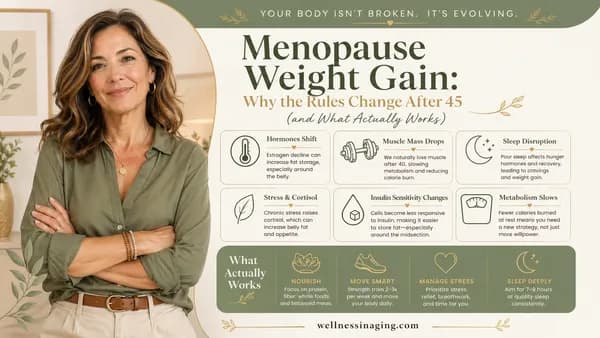
Menopause Weight Gain: Why the Rules Change After 45 (and What Actually Works)
Why menopause causes belly fat even when weight stays stable — the hormonal mechanism behind visceral fat redistribution and evidence-based strategies that work differently after 45.
Read article →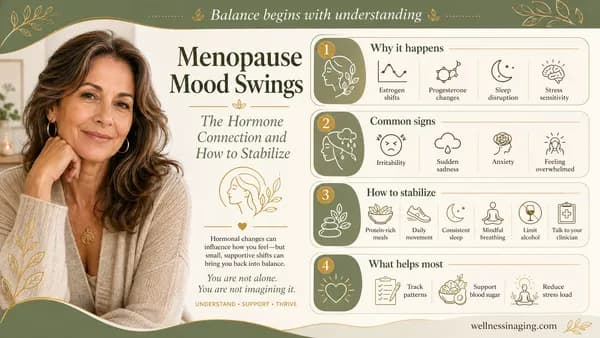
Menopause Mood Swings: The Hormone Connection and How to Stabilize
Why estrogen fluctuations cause dramatic mood changes during menopause — and evidence-based approaches from lifestyle to supplements to therapy.
Read article →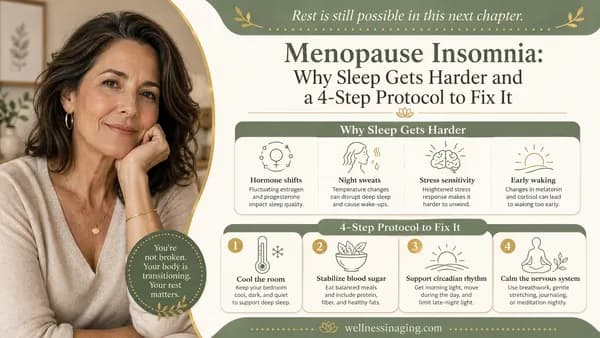
Menopause Insomnia: Why Sleep Gets Harder and a 4-Step Protocol to Fix It
Menopause disrupts sleep through four distinct mechanisms. This guide explains each one and gives you a specific, prioritized protocol to fix them.
Read article →