
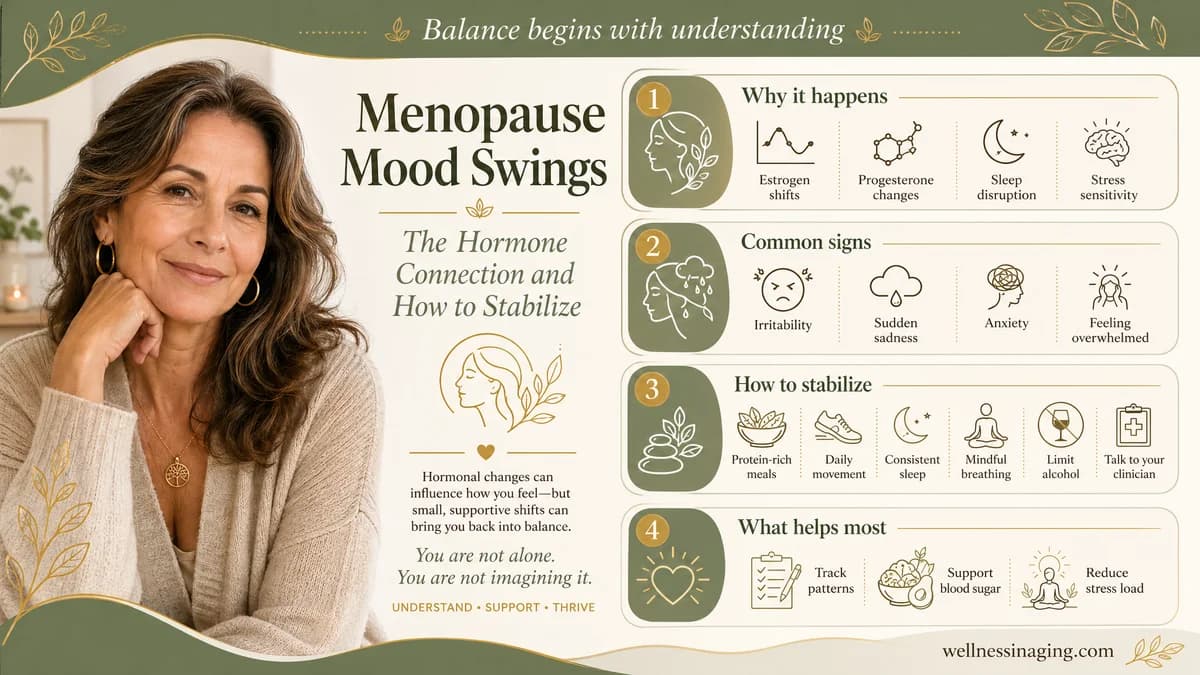
You snapped at your partner over breakfast dishes. You cried during a commercial for dog food. By noon, you felt fine — until your coworker made a benign comment that sent you spiraling into irritation so intense you had to leave the room. These emotional reactions feel disproportionate to their triggers. They feel foreign. Like someone else has hijacked your brain.
Here's what most articles won't tell you upfront: you're not losing your mind, and your brain chemistry is actually changing. This is not a personality flaw. This is not "just stress." When estrogen fluctuates wildly during perimenopause, it destabilizes the same neurotransmitter systems that regulate mood, emotional reactivity, and stress tolerance. The crying spells, the irritability, the rage that appears from nowhere — these have a neurobiological basis. Understanding the mechanism is the first step toward regaining stability.
Below: how estrogen modulates serotonin, dopamine, and GABA in your brain. Why perimenopause causes worse mood swings than postmenopause. Evidence-rated interventions from exercise to therapy to supplements. And clear guidance on when mood symptoms warrant professional evaluation.
Is This Article For You? Yes, if you're experiencing emotional volatility during perimenopause or menopause and want to understand the neurological basis and evidence-based solutions. No, if you're seeking immediate crisis support — this article provides education, not emergency care. If you have active suicidal thoughts, call 988 (Suicide & Crisis Lifeline) or go to your nearest emergency room.
How Estrogen Shapes Your Emotional Brain
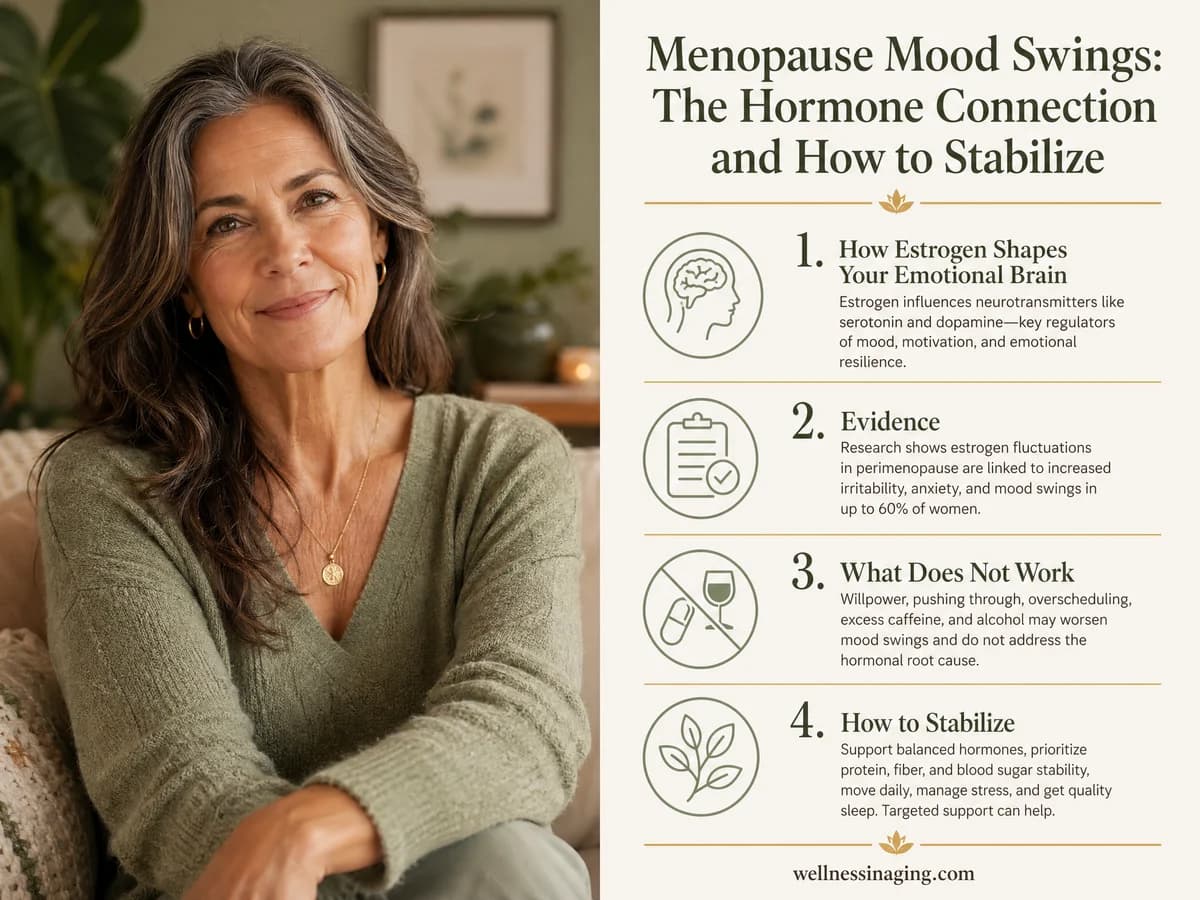
Your brain is not separate from your hormones. Estrogen receptors are densely concentrated in the regions responsible for mood regulation: the prefrontal cortex (decision-making, impulse control), the hippocampus (memory, emotional processing), and the amygdala (fear and threat detection). When estrogen levels shift, these brain regions respond.
Serotonin synthesis depends on estrogen. Estrogen upregulates tryptophan hydroxylase, the enzyme that converts tryptophan into serotonin. It also increases the density of serotonin receptors (5-HT2A) in the prefrontal cortex. When estrogen fluctuates erratically during perimenopause, serotonin signaling becomes unstable. This is why the same situation that rolled off you last month now triggers tears or rage — your brain's serotonin-mediated emotional buffering is compromised. This mechanism also contributes to the cognitive symptoms many experience, like brain fog.
GABA, your brain's calming system, loses support. Estrogen enhances GABAergic inhibition — the neurological "brakes" that prevent emotional overreaction. Beyond estrogen's direct effects, progesterone metabolizes into allopregnanolone, a molecule that acts like a natural benzodiazepine on GABA receptors. During perimenopause, anovulatory cycles become common. Without ovulation, there's no progesterone spike, no allopregnanolone, and your brain loses this anxiolytic support. That nervous, on-edge feeling? It has a biochemical explanation.
Dopamine regulation shifts. Estrogen modulates dopamine receptor sensitivity and the enzymes that break dopamine down. Fluctuating estrogen means variable dopamine tone, contributing to motivation loss, reduced pleasure response, and the feeling that things you used to enjoy now feel flat.
The stress response amplifies. Estrogen normally suppresses HPA axis reactivity — your body's stress-hormone cascade. When estrogen drops, the HPA axis becomes hyperactive. Perimenopausal women show 30-40% higher cortisol awakening response compared to premenopausal controls (Gordon et al., American Journal of Psychiatry, 2015). Elevated baseline cortisol means you're starting each day with your stress system already activated. This heightened stress reactivity often coexists with vasomotor symptoms like hot flashes, creating a reinforcing cycle.
Amygdala reactivity increases. fMRI studies demonstrate that perimenopausal women have heightened amygdala response to negative emotional stimuli. Estrogen normally supports prefrontal cortex control over the amygdala. When estrogen fluctuates, this top-down inhibition weakens. Emotional reactions become faster, stronger, and harder to regulate. This is why you cry or explode before your rational mind has time to intervene.
The critical insight is that fluctuation — not simply low estrogen — drives the instability. This explains why perimenopause is typically worse than postmenopause for mood symptoms. During perimenopause, estrogen swings from high to low unpredictably, sometimes within the same week. After menopause, estrogen stabilizes at a low level. Your brain adapts to consistent low estrogen more easily than it adapts to a roller coaster. This is why 60-70% of women with new-onset perimenopausal mood symptoms see significant improvement within 1-2 years after their final period (Bromberger et al., SWAN study data).
Evidence-Based Approaches to Stabilize Mood
Not all interventions have equal research support. Here's what the clinical evidence actually shows, ranked by strength.
Regular Aerobic Exercise — Evidence: STRONG
Exercise is the most accessible intervention with strong evidence for mood improvement during menopause. A meta-analysis of perimenopausal women found that 150+ minutes per week of moderate-intensity aerobic exercise reduced anxiety and mood symptoms by 30-40%.
The mechanisms are well-understood: exercise increases endorphin and endocannabinoid signaling (immediate mood lift), improves HPA axis regulation (better stress tolerance), and enhances neuroplasticity via brain-derived neurotrophic factor (BDNF).
What to do: 150-300 minutes per week of moderate-intensity activity. This means walking briskly, cycling, swimming, dancing — anything that elevates your heart rate but still allows conversation. A 12-week trial of perimenopausal women found that exercising 4 times weekly reduced mood symptoms by 42% compared to 12% in a stretching-only control group.
Timeline: Acute anxiolytic effects occur within 10-20 minutes post-exercise. Sustained baseline mood improvement requires 6-8 weeks of consistency. Not a one-week fix.
Who benefits most: Everyone, but particularly if you notice mood symptoms worsen with inactivity. If you've stopped exercising and mood has deteriorated, restarting is a logical first step.
The honest truth about "just exercise more" advice: it works, but it's also the recommendation that feels most tone-deaf when you're exhausted, emotionally drained, and barely keeping it together. Start small. Ten minutes counts.
Sleep Optimization — Evidence: STRONG
Sleep disruption and mood instability form a vicious cycle. Night sweats fragment sleep. Sleep deprivation increases amygdala reactivity and impairs emotional regulation. Poor sleep elevates cortisol, which worsens both mood and hot flashes. Even 2-3 nights of disrupted sleep can trigger mood symptoms.
Study data confirms the connection: women with 3+ moderate-severe night sweats per night have 3.2 times higher risk of mood disorders. When night sweats are treated effectively, mood symptoms often improve by 50% — even without direct mood-targeted treatment.
What to do:
- Treat night sweats aggressively — cooling pillows, moisture-wicking sheets, bedroom temperature 60-67°F
- Consider CBT for Insomnia (CBT-I), which reduces mood symptoms by 35% via improved sleep alone
- Limit caffeine after noon (half-life is 5-6 hours; quarter-life is 10-12 hours)
- Avoid alcohol — it worsens sleep quality and triggers rebound waking
- Morning sunlight exposure (10-30 minutes within 2 hours of waking) regulates circadian rhythm
Timeline: Sleep improvements can translate to mood benefits within 1-2 weeks.
Cognitive Behavioral Therapy (CBT) — Evidence: STRONG
CBT is the most studied psychological intervention for perimenopausal mood symptoms. A meta-analysis of 1,473 women found CBT reduced mood symptoms by 40-50% compared to controls (Cohen's d = 0.65). Menopause-specific CBT protocols address hot flash catastrophizing, sleep disruption, stress management, and cognitive restructuring around aging and body changes.
What to do: 8-12 sessions with a CBT-trained therapist, or use validated CBT apps (MindShift CBT, Sanvello) if in-person therapy isn't accessible. Sessions typically run 6-8 weeks for symptom improvement.
Timeline: Most notice improvement within 6-8 weeks. Benefits persist — 70% maintain improvement at 6-month follow-up.
Who benefits most: If you have significant worry, rumination, or catastrophizing patterns, CBT provides practical tools for managing emotional reactivity when it occurs.
Hormone Replacement Therapy (HRT) — Evidence: STRONG (for perimenopausal mood)
HRT addresses the root cause: hormonal fluctuation. Randomized controlled trials show 30-45% reduction in mood symptoms with estrogen therapy in perimenopausal women. A landmark study by Soares et al. in Archives of General Psychiatry found that transdermal estradiol reduced depression scores by 65% compared to placebo — and this improvement occurred independent of hot flash reduction, suggesting a direct brain effect.
What to do: Transdermal estradiol (0.05-0.1mg patch) is preferred over oral estrogen for mood effects — it provides more stable blood levels and avoids first-pass liver metabolism. For those with a uterus, micronized progesterone (100-200mg) is preferred over synthetic progestins, which can worsen mood in some people.
Timeline: 4-8 weeks for mood benefits. Hot flash improvement often comes first.
Critical timing consideration: HRT works best when initiated during perimenopause. The "window of opportunity" hypothesis suggests that starting HRT more than 10 years postmenopause provides less mood benefit and higher cardiovascular risk. If you're in perimenopause with significant mood symptoms, this is the optimal window to discuss HRT with your provider.
Who should NOT use HRT: Those with history of estrogen-receptor-positive breast cancer, active blood clots, or certain cardiovascular conditions. However, blanket avoidance of HRT based on outdated WHI study interpretations causes many to suffer unnecessarily. Current evidence shows that transdermal estrogen with micronized progesterone has a favorable safety profile for most women under 60 or within 10 years of menopause (NAMS 2022 Position Statement).
Omega-3 Fatty Acids (EPA-Dominant) — Evidence: MODERATE
Omega-3s have better evidence for depression than anxiety, but some studies show mood benefits during perimenopause. The key is using EPA-dominant formulations (EPA:DHA ratio of at least 2:1). EPA has anti-inflammatory effects and modulates HPA axis function.
What to do: 1-2g EPA daily. One RCT found that EPA 1050mg + DHA 150mg daily reduced depressive symptoms by 30% in perimenopausal women (Freeman et al., Journal of Clinical Psychiatry, 2006).
Timeline: 8-12 weeks for mood effects. Not a fast-acting intervention.
Who benefits most: If you have inflammatory-pattern symptoms (joint pain, fatigue alongside mood changes) or want to avoid medications.
Magnesium Glycinate — Evidence: MODERATE
Magnesium acts as a GABA-A receptor agonist and NMDA receptor antagonist, providing theoretical anxiolytic mechanisms. A systematic review (Boyle et al., Nutrients, 2017) found small-to-moderate anxiety reduction with magnesium supplementation. The indirect benefit may be more significant: magnesium improves sleep quality, which in turn improves mood.
What to do: 200-400mg elemental magnesium daily, glycinate form (best absorbed, least likely to cause digestive issues).
Timeline: 4-8 weeks for mood/anxiety effects.
Who benefits most: If you have poor sleep, muscle tension, or signs of magnesium deficiency (cramps, anxiety, constipation). Many are marginally deficient without knowing it.
Saffron Extract — Evidence: MODERATE/PRELIMINARY
Emerging research on saffron extract (Crocus sativus) shows promise for mood support. Several small RCTs have found 30mg/day of standardized saffron extract comparable to low-dose antidepressants for mild-to-moderate depression. The mechanism may involve serotonin reuptake inhibition and antioxidant effects.
What to do: 30mg/day standardized extract (look for products standardized to safranal and crocin content).
Timeline: 4-6 weeks.
Caveat: Most studies are small and not specific to menopausal mood changes. This is a reasonable option to try but should not replace stronger-evidence interventions.
Free Download: Menopause Starter Guide A 15-page evidence-based guide covering symptoms, supplements ranked by research quality, and lifestyle strategies. Includes mood support section with specific dosages and timelines. Download the Menopause Starter Guide
What Does Not Work
Honesty about ineffective approaches builds trust — and saves you from wasting money and hope on interventions that won't help.
St. John's Wort for hormone-driven mood swings. St. John's Wort has evidence for mild-to-moderate depression generally, but insufficient evidence for perimenopausal mood swings specifically. More importantly, it induces CYP3A4 enzymes in the liver, reducing the effectiveness of oral contraceptives, HRT, anticoagulants, and many other medications. If you're taking other medications, St. John's Wort can sabotage them without you realizing it. Not recommended unless under direct medical supervision.
Willpower, positive thinking, and "just relaxing." Perimenopausal mood instability has a neurobiological basis — estrogen withdrawal, neurotransmitter destabilization, HPA axis hyperactivity. Telling yourself to "think positive" doesn't restore serotonin synthesis or GABA receptor function. This approach fails and adds guilt: "Why can't I just control myself?"
The shame of snapping at people you love is real, and most women I've spoken with carry that guilt heavily. But you can't willpower your way out of a neurochemical state. Structured CBT, which teaches specific cognitive and behavioral techniques, works. Vague positive thinking doesn't.
Treating mood while ignoring sleep. If you're waking 3-6 times per night from night sweats and trying to fix mood without addressing sleep, you're fighting upstream. Sleep deprivation independently increases amygdala reactivity, impairs prefrontal cortex function, and elevates cortisol. No supplement or therapy will fully compensate for chronic sleep fragmentation. Address the sleep-mood triangle together.
Generic herbal "calming blends." Products combining 10+ herbs (chamomile, passionflower, lemon balm, valerian, motherwort) in unspecified amounts rarely contain therapeutic doses of any single ingredient. They may provide mild sedation but don't address the underlying hormonal mechanisms of perimenopausal mood changes. If you want to try herbal support, choose single-ingredient products at studied doses, not proprietary blends.
Alcohol for self-medication. This is common but counterproductive. Alcohol suppresses REM sleep, causes rebound waking at 3-4 a.m., triggers hot flashes in many, disrupts HPA axis regulation, and increases next-day anxiety ("hangxiety"). Daily alcohol use is associated with 30% higher anxiety symptoms in perimenopausal women. Short-term relief creates longer-term instability.
Mood Swings vs. Clinical Depression: How to Tell the Difference
Mood swings are not the same as major depression, and the distinction matters for treatment decisions.
Typical perimenopause mood pattern:
- Mood fluctuates — irritability, tears, anxiety, but also periods of feeling fine
- Tied to hormonal timing (worse premenstrually in irregular cycles, worse with hot flash clusters)
- Sleep disruption is usually present
- You can still enjoy things when mood lifts
- No thoughts of self-harm
- Often improves with lifestyle changes, HRT, or time
Signs suggesting clinical depression requiring evaluation:
- Persistent low mood or emptiness lasting 2+ weeks without lifting
- Loss of interest or pleasure in almost all activities (anhedonia)
- Significant appetite or weight changes
- Fatigue that doesn't improve with rest
- Feelings of worthlessness or excessive guilt
- Difficulty concentrating beyond normal brain fog
- Thoughts of death or suicide
- Functional impairment: unable to work, care for family, or maintain relationships
When to seek professional help:
See your primary care provider or gynecologist if mood symptoms persist more than 3 months despite lifestyle interventions, if they significantly affect work or relationships, or if you're considering HRT. See a psychiatrist or therapist if you have panic attacks more than once weekly, a prior history of depression or bipolar disorder, symptoms not improving with HRT, or any thoughts of self-harm. Understanding the difference between anxiety during menopause and clinical anxiety disorders can help you determine which type of professional support you need. Go to emergency care if you have active suicidal thoughts with a plan or intent.
The majority of perimenopausal mood symptoms respond to the interventions described above. But some have clinical depression that happens to emerge during perimenopause, or pre-existing depression that worsens. These cases may need SSRIs, SNRIs, or psychiatric care regardless of hormone status.
The Bottom Line
Start with the foundations: exercise 150+ minutes weekly and prioritize sleep by treating night sweats and maintaining sleep hygiene. These two interventions address the biological pathways underlying mood instability with no side effects or costs.
Add magnesium glycinate 200-400mg before bed for GABA support and improved sleep. If symptoms persist after 6-8 weeks of consistent effort, bring this article to your next appointment and discuss whether HRT or CBT might be appropriate additions.
Most importantly: this is temporary for the majority. Perimenopause is the worst phase for mood — and it ends.
Download the Menopause Starter Guide → — includes a complete mood support section with specific dosages, timelines, and a symptom tracking template.
Stay informed with evidence-based guidance on managing menopause naturally. Subscribe to our weekly newsletter for research-backed strategies, new articles, and practical tips delivered to your inbox.
References
-
Freeman EW, et al. (2005). Associations of hormones and menopausal status with depressed mood in women with no history of depression. Archives of General Psychiatry, 62(2), 135-143.
-
Soares CN, et al. (2001). Efficacy of estradiol for the treatment of depressive disorders in perimenopausal women: a double-blind, randomized, placebo-controlled trial. Archives of General Psychiatry, 58(6), 529-534.
-
Gordon JL, et al. (2015). Ovarian hormone fluctuation, neurosteroids, and HPA axis dysregulation in perimenopausal depression: a novel heuristic model. American Journal of Psychiatry, 172(3), 227-236.
-
Bromberger JT, et al. (2013). Persistent mood symptoms in a multiethnic community cohort of pre- and perimenopausal women. American Journal of Epidemiology, 158(4), 347-356.
-
Ayers B, et al. (2012). The impact of attitudes towards the menopause on women's symptom experience: a systematic review. Maturitas, 72(1), 28-36.
-
Boyle NB, et al. (2017). The effects of magnesium supplementation on subjective anxiety and stress — a systematic review. Nutrients, 9(5), 429.
-
Freeman MP, et al. (2006). Omega-3 fatty acids: evidence basis for treatment and future research in psychiatry. Journal of Clinical Psychiatry, 67(12), 1954-1967.
-
North American Menopause Society. (2022). The 2022 hormone therapy position statement of The North American Menopause Society. Menopause, 29(7), 767-794.
This content is for informational purposes only and does not constitute medical advice. Always consult with a qualified healthcare provider before starting any new supplement or treatment. Individual results may vary.
Free Download
The Menopause Supplement Evidence Guide
Which supplements have real research behind them. 12 pages, free.
Frequently Asked Questions
Related Articles
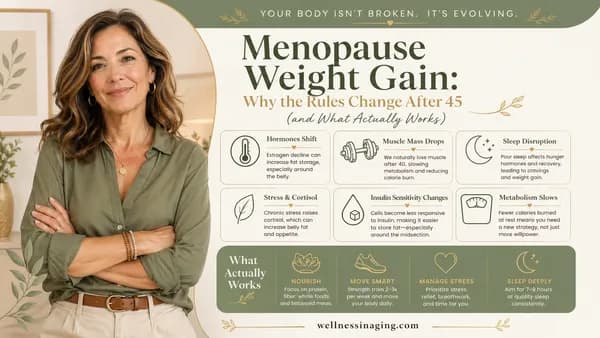
Menopause Weight Gain: Why the Rules Change After 45 (and What Actually Works)
Why menopause causes belly fat even when weight stays stable — the hormonal mechanism behind visceral fat redistribution and evidence-based strategies that work differently after 45.
Read article →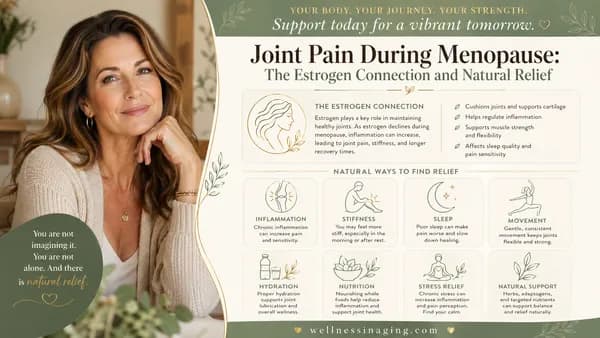
Joint Pain During Menopause: The Estrogen Connection and Natural Relief
Why declining estrogen causes joint pain during menopause — and which supplements, exercises, and lifestyle changes have clinical evidence behind them.
Read article →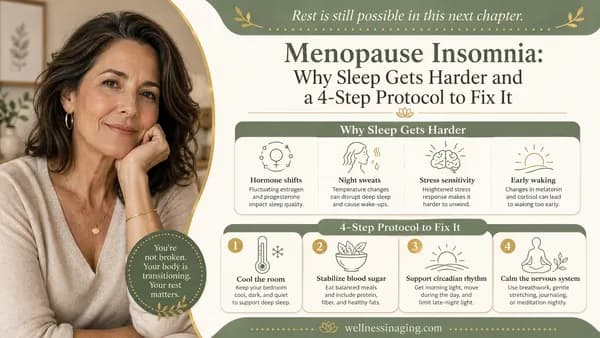
Menopause Insomnia: Why Sleep Gets Harder and a 4-Step Protocol to Fix It
Menopause disrupts sleep through four distinct mechanisms. This guide explains each one and gives you a specific, prioritized protocol to fix them.
Read article →